
How to Store Beeswax Candles and Keep Them Perfect
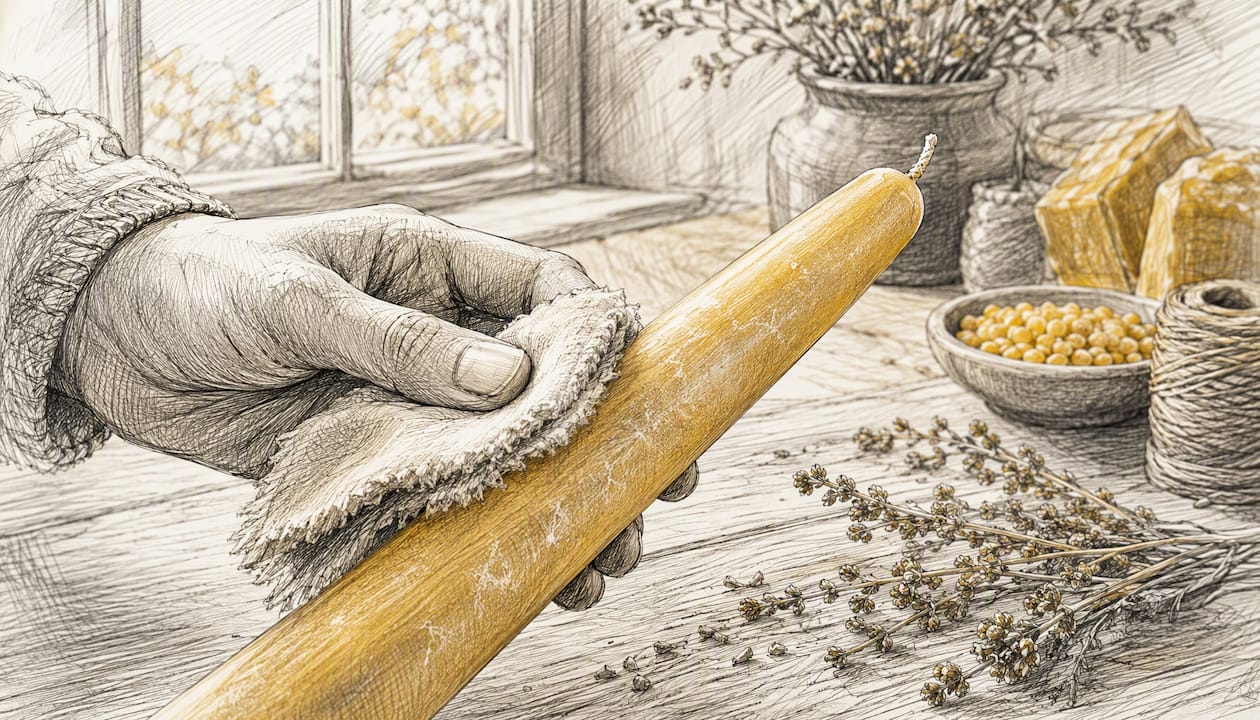
Store beeswax candles cool, dark, dry, covered, and upright. That single rule covers the core of proper bišu vaska sveču glabāšana. Aim for 15–20°C (59–68°F) and keep candles wrapped in parchment or tissue inside a closed box. A whitish film called bloom may appear on the surface over time; it is a natural sign of pure beeswax, not damage, and buffs off with a soft cloth.
Quick rules:
- Temperature: 15–20°C (59–68°F)
- Humidity: low; avoid bathrooms and kitchens
- Light: no direct or indirect sunlight
- Wrapping: parchment paper, tissue, or soft lint-free cloth
- Do not seal in airtight plastic for long-term storage
- Store upright; never lay tapers flat
Key Takeaways
Proper beeswax candle storage requires cool temperatures (15–20°C), darkness, low humidity, individual wrapping, and upright orientation to preserve shape, scent, and burn quality for two or more years.
| Point | Details |
|---|---|
| Temperature range | Store at 15–20°C (59–68°F); avoid radiators, car trunks in summer, and freezing conditions. |
| Wrap before storing | Use parchment paper or tissue; avoid airtight plastic bags for long-term storage. |
| Store upright | Tapers and pillars deform under lateral pressure; keep them vertical with dividers. |
| Trim and label | Trim wick to 1/4 inch, cool completely, and label with type and date before boxing. |
| Shelf life | Correctly stored beeswax candles retain quality for two or more years. |
Table of Contents
- Why storing beeswax candles correctly matters
- Ideal storage conditions for beeswax candles in Latvia
- What to wrap candles in and which containers work best
- How to store different candle types by shape
- How to prepare candles before putting them into storage
- Troubleshooting: bloom, warping, cracks, and wick problems
- Packing and shipping beeswax candles in Latvia
- How long do beeswax candles last in storage?
- A practical note from Marks at Latviancandles
- Sources
- FAQ
Why storing beeswax candles correctly matters
Poor storage changes more than appearance. Beeswax candles left in the wrong conditions can warp, crack, lose scent, or develop wick problems that affect burn safety.
Common degradation issues:
- Bloom/whitening: A surface film from temperature swings; cosmetic only, but heavy bloom can look like damage.
- Color fade: UV light breaks down the natural golden pigment in beeswax.
- Scent loss: Fragrance and the natural honey scent of beeswax dissipate faster in warm or open-air conditions.
- Warping: Heat above roughly 27°C (80°F) softens the wax and deforms the shape.
- Cracks: Freezing temperatures make beeswax brittle and prone to splitting.
- Wick moisture: Humidity can dampen cotton wicks, causing poor ignition and uneven burns.
Beeswax is naturally more stable than soy or paraffin. It resists moisture better and holds its structure longer. Still, heat, light, and humidity will degrade it over time if you ignore basic storage rules. The guidance here reflects craft-tested practice from Marks at Latviancandles, where mold-made beeswax candles are a daily focus.
Pro Tip: Dust is a hidden problem. Dust that settles on an unwrapped candle melts into the wax pool during burning and can clog the wick. Always keep candles covered.
Ideal storage conditions for beeswax candles in Latvia
Latvia’s temperate climate gives you a natural advantage. Winters are cool and summers are mild enough that most interior rooms stay within a workable range for most of the year. The challenge is seasonal extremes and direct sun through windows.
- Temperature. Target 15–20°C (59–68°F) for everyday storage. For long-term preservation, the cooler end of that range is better. The broader acceptable band is 50–75°F (10–24°C). Avoid radiators, heated floors, and sunny windowsills.
- Humidity. Keep candles away from bathrooms and kitchens. High humidity dampens wicks and encourages surface frosting. A bedroom drawer or linen closet is a better choice than a shelf near the sink.
- Light. UV light fades color and degrades scent. A shaded cupboard or closed box is sufficient. Even indirect sunlight through a window causes slow damage over weeks.
- Good spots in a Latvian home: Bedroom drawer, linen closet, interior hallway shelf, shaded pantry cupboard.
- Spots to avoid: Windowsill, car trunk in summer, uninsulated attic or basement with temperature swings, shelf above a radiator.
Pro Tip: A closed cardboard box inside a drawer is one of the most practical storage solutions. It blocks light, limits dust, and keeps temperature stable without any special equipment.
What to wrap candles in and which containers work best
The right wrapping protects the wax surface, preserves scent, and prevents dust from settling on the wick.
Recommended materials:
- Parchment paper or wax paper: breathable, non-stick, and widely available
- Tissue paper: soft enough not to scuff textured or molded surfaces
- Soft lint-free cloth: good for pillars and larger candles
- Cardboard boxes with dividers: keep candles separated and upright
- Small tissue-lined bins or drawers for tea lights and votives
Why “breathing” matters: Beeswax needs slight air circulation. Airtight plastic bags trap moisture and can accelerate bloom or cause condensation on the wax surface. For short-term display (a few days), an open shelf is fine. For storage beyond a week, wrap and box.
Materials to avoid:
- Airtight plastic bags for long-term storage
- Newspaper: ink transfers to the wax surface
- Heavy stacking without padding: dents and pressure marks form in soft wax
Scented beeswax candles benefit from a lid or closed box to contain the fragrance. Unscented candles still need covering to stay dust-free, since dust melts into the wax pool and affects wick performance.
How to store different candle types by shape
Storage needs vary by shape. A taper and a tea light have almost nothing in common when it comes to packing.
- Tapers: Store upright in a tube or divider box. Laying them flat causes bending, especially in warmer rooms. If you must store them flat, support the full length with a rigid surface and flip them halfway through long storage.
- Pillars and molded candles: Store upright. Uneven pressure from stacking flattens the base or distorts the sides. Pad between pieces with tissue. Bee cells pillar molds produce textured surfaces that scuff easily; wrap each candle individually.
- Votives and tea lights: Keep in trays or small boxes with dividers. Foil cups on tea lights add a layer of protection and make them easier to handle without fingerprints.
- Decorated or painted candles: Wrap individually in tissue. Never stack without padding; paint and surface detail transfer to adjacent wax.
- Mold-made candles with fine detail: Soft liners or the original silicone mold shape can hold the candle during storage and protect crisp edges from pressure damage.
Pro Tip: For bee-cell tea lights, a shallow cardboard tray with each cup sitting in its own tissue nest prevents the honeycomb texture from pressing against neighboring candles.
How to prepare candles before putting them into storage
A candle stored with soot residue, an untrimmed wick, or residual heat will degrade faster. A short preparation routine takes two minutes and extends storage life significantly.
- Allow full cool-down. After burning, wait at least two hours before storing. Wax that is still warm deforms under wrapping or pressure.
- Trim the wick to about 1/4 inch. A long wick collects moisture and carbon deposits during storage. Trim with scissors or a wick trimmer.
- Wipe the surface. Use a dry, soft cloth to remove dust or soot from the wax pool and sides. Do not use water.
- Wrap and box. Parchment or tissue first, then place in a closed box.
- Label. Note the candle type, scent (if any), pour date or purchase date, and any handling notes such as “fragile” or “decorative only.”
For unused candles, the same steps apply except the cool-down. Wipe off any dust, wrap, and label with the purchase date. Wick care guidance from Latviancandles covers trimming in more detail.
Pro Tip: Write the label on a small piece of masking tape and stick it to the box, not the candle. Adhesive on wax can leave marks.
Troubleshooting: bloom, warping, cracks, and wick problems
Most storage problems are fixable. A few require caution.
Bloom (whitish surface film): Bloom is a natural crystallization of beeswax components. It is cosmetic and does not affect burn quality. Buff it off with a soft cloth or a brief pass of mild warm air from a hair dryer held at a distance. Many makers leave bloom in place as a sign of pure, unprocessed wax.
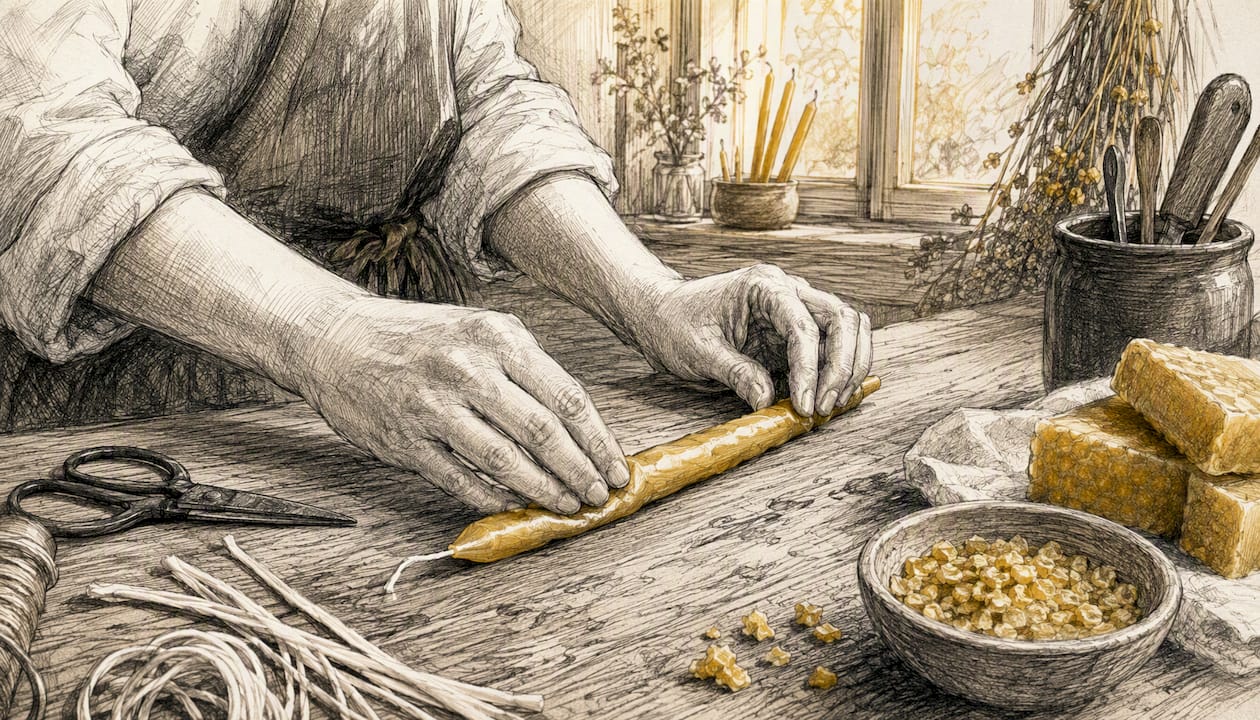
Warping and softening: Heat above roughly 27°C (80°F) softens beeswax. A warped candle can sometimes be reshaped by placing it in a cool, stable environment and gently applying even pressure. Do not attempt to force a shape change; the wax may crack.
Cracks and brittleness: Extreme cold makes beeswax brittle. Prevention is straightforward: keep candles above 10°C (50°F). A cracked decorative candle can be held together with a small amount of melted beeswax for display purposes, but a structurally cracked candle should not be burned.
Wick problems: Trim to 1/4 inch before each burn. If the wick absorbed moisture during storage, let the candle sit in a dry room for 24 hours before lighting. For best burn performance on a dense beeswax candle, allow the first burn to run approximately 3.5 hours to establish an even melt pool.
Bloom on a beeswax candle is a quality indicator, not a defect. It shows the wax is natural and unrefined.
Packing and shipping beeswax candles in Latvia
Short trips and postal shipping both require padding. Beeswax is denser than paraffin but still deforms under pressure or heat.
- Short trips: Place candles upright in a padded box with dividers. Keep the box flat in the passenger footwell or back seat, not the trunk in summer.
- Postal shipping within Latvia: Wrap each candle in tissue, then bubble wrap. Place in a rigid cardboard box with at least 3–4 cm of cushioning on all sides. Mark the outer box “Fragile.”
- Seasonal timing: Avoid shipping beeswax in July and August without insulated packaging. Ground transit in warm weather can reach temperatures that soften wax. Choose faster shipping options or add an insulated liner.
- Gift wrapping: Use a protective internal wrap (tissue or parchment) first, then decorative outer packaging. A beautiful box with no internal protection will not keep the candle intact.
Pro Tip: For postal gifts, place the wrapped candle inside a snug inner box, then pack that box inside a larger outer box with crumpled paper filling the gap. Two layers of rigid protection prevent crushing far better than one.
How long do beeswax candles last in storage?
A correctly stored beeswax candle retains quality for two or more years. Beeswax outlasts soy and paraffin in storage because it is naturally stable and resists moisture.
Inspection checklist for older candles:
- Surface: heavy bloom that won’t buff off, or discoloration beyond normal yellowing
- Scent: significant loss in a scented candle
- Wick: fraying, moisture damage, or heavy carbon buildup
- Structure: visible cracks, deformation, or a soft base
Restoration steps:
- Buff surface bloom with a soft cloth
- Trim the wick to 1/4 inch and let the candle dry in a warm room for 24 hours before the first burn
- Prime the melt pool on the first burn by burning for approximately 3.5 hours
A candle with structural cracks, a damaged wick that cannot be trimmed, or significant deformation should not be burned. Use it as a display piece or melt it down for a new pour.
A practical note from Marks at Latviancandles
The storage rules in this guide come directly from making and handling mold-cast beeswax candles. Mold-made candles, particularly those with fine honeycomb or geometric textures, are more vulnerable to surface damage than plain-dipped candles. The crisp edges that a quality silicone mold produces are exactly what gets scuffed by careless stacking or rough wrapping.
For mold-specific care and handling guidance, the instructions page at Latviancandles covers mold use and candle release in detail. Readers who want to explore the full range of mold designs, from bee-cell pillars to decorative holiday shapes, can browse over 180 silicone mold designs at Latviancandles. Never attempt to reshape a cracked candle with open flame or boiling water; gentle ambient warmth in a stable room is the only safe method.

Sources
- How to Store Beeswax Candles Properly | Storage Guide UK
- Best Way to Store Beeswax Candles – Honey Candles Canada
- How to Store Candles Properly (Most People Get This Wrong) – MBur Candle Co
- How to Properly Care for Your Beeswax Candle For A Cleaner, Longer Burn | Branch Basics
- Storing your beeswax is simple! – Toadily Handmade Beeswax Candles
FAQ
How do you store beeswax candles long-term?
Wrap each candle in parchment paper or tissue, place upright in a closed cardboard box, and store at 15–20°C in a dark, dry location. Trim the wick to 1/4 inch and label with the date before boxing.
What causes the white film on beeswax candles?
The white film is called bloom. It is a natural crystallization of beeswax components, not a sign of damage. Buff it off with a soft cloth or leave it as a mark of pure, unprocessed wax.
Can beeswax candles be stored in the refrigerator?
No. Extreme cold makes beeswax brittle and prone to cracking. Room temperature storage between 15–20°C is preferable for both short-term and long-term preservation.
How long do beeswax candles last in storage?
A correctly stored beeswax candle retains its quality for two or more years. Beeswax is more shelf-stable than soy or paraffin when kept cool, dry, and covered.
Should beeswax candles be stored in airtight containers?
Not for long-term storage. Airtight plastic traps moisture and can accelerate surface bloom or condensation. Use breathable wrapping such as parchment paper and a closed but not sealed box.


