
How Local Sourcing Shapes Eco Crafts and Sustainability
Local sourcing is a practical lever that reduces certain transport and packaging impacts, improves traceability, and channels economic benefits into local communities for eco crafters. Acquiring materials from nearby suppliers rather than across global supply chains shortens delivery legs, makes supplier relationships more transparent, and keeps spending closer to home. The role of local sourcing in eco crafts is real, but it is not a universal emissions fix. Production methods, energy sources, and transport mode all shape the actual environmental outcome. The sections below cover environmental effects, community impacts, trade-offs, vetting steps, certifications, and simple metrics you can track.
Key Takeaways
Local sourcing reduces specific environmental impacts and strengthens community economics for eco crafters, but production energy mix and transport mode matter more than distance alone.
| Point | Details |
|---|---|
| Transport is often a minority of lifecycle emissions | Focus supplier vetting on production energy mix, not just delivery distance. |
| Local multiplier effect is real | Local independent businesses recirculate a substantially larger share of revenue locally than chains. |
| Vetting beats assumptions | Ask suppliers about energy source, processing steps, and waste handling before switching. |
| Track five simple metrics | Local spend %, active supplier count, air-freight avoidance, waste diverted, and consolidated shipments. |
| Latviancandles supports eco craft practice | Reusable silicone molds from Latviancandles reduce per-candle waste for beeswax makers sourcing locally. |
Table of Contents
- How does local sourcing improve environmental outcomes for eco crafts?
- How local sourcing supports local economies and artisan communities
- Operational advantages local sourcing gives small makers
- When local sourcing may not be greener or practical
- How to find, vet, and build lasting relationships with local suppliers
- Which materials and eco-certifications should U.S. crafters prioritize?
- Simple metrics to track whether local sourcing is working
- U.S. vignettes: local sourcing in craft practice
- An editorial perspective on local sourcing and craft practice
- Reusable silicone molds for eco-conscious candle makers
- Sources
- FAQ
How does local sourcing improve environmental outcomes for eco crafts?
Local sourcing in creative and craft practice reliably reduces transportation emissions, cuts packaging intensity, and opens circular material flows that are harder to run with distant suppliers. The gains are most dependable in specific situations.
Where local sourcing moves the needle:
- Shorter delivery legs. Regional suppliers typically ship by ground rather than air. Avoiding air freight is the single largest transport-related emissions reduction available to small makers.
- Less packaging. Nearby suppliers can often deliver in reusable totes, bulk containers, or with minimal protective packaging, since fragile long-haul protection is unnecessary.
- Circular material flows. Proximity makes it practical to return offcuts, exchange reclaimed materials, or arrange repair and refurbishment loops that a distant vendor cannot support.
- Reduced cold-chain or protective logistics for perishable or fragile craft inputs like beeswax, natural dyes, or fresh botanicals.
Lifecycle perspective: A peer-reviewed study in Environmental Science & Technology estimated household food delivery “food-miles” at roughly 0.4 t CO2e per year against a total household food climate impact of about 8.1 t CO2e per year. Transport is often a minority of total lifecycle emissions. For crafters, this means the material’s production phase, including how it was grown, processed, or manufactured, usually matters more than the distance it traveled.
Local sourcing matters most when it replaces air freight, enables reuse loops, or cuts packaging for fragile supplies. For materials already shipped by ground freight, the production energy mix at the supplier’s facility often has more climate impact than the final delivery distance.
How local sourcing supports local economies and artisan communities
Spending locally recirculates money through the regional economy at a higher rate than purchasing from national chains. Research highlighted by Vital Communities found that local independent businesses return a substantially larger share of revenue to the local economy than chain retailers, with some studies showing local recirculation rates significantly higher.

For crafters, that multiplier effect is direct. When you buy beeswax from a regional apiary or natural fiber from a local farm, a larger fraction of that dollar stays in your region, supporting wages, local services, and other small businesses.
Community and cultural benefits:
- Local supplier relationships preserve regional craft traditions and material knowledge, such as heirloom dye plant cultivation or heritage woodworking techniques.
- Proximity to suppliers creates informal knowledge exchange: visits to a local mill or farm often surface material insights that a product spec sheet never would.
- Supporting local artisan networks strengthens the broader ecosystem of makers, which can improve collective bargaining, shared equipment access, and co-op buying power.
Pro Tip: Structure recurring monthly orders rather than one-off purchases. Predictable volume gives small local suppliers the cash-flow confidence to invest in better practices, pay fair wages, and hold stock for you. A standing order of even modest size often earns priority fulfillment and better pricing.
Operational advantages local sourcing gives small makers
Proximity improves quality control, reduces lead times, and makes circular material strategies practical for micro-batch producers.
Supply-chain benefits for small-scale craft production:
- Sample access. You can request a small sample batch, inspect it in person, or arrange a quick exchange without the cost and delay of international shipping.
- Faster turnarounds. Regional suppliers can often fill small reorders in days rather than weeks, reducing the need to carry large safety stock.
- Easier quality checks. A short drive or video call with a local supplier replaces weeks of back-and-forth email with an overseas vendor.
- Circular material strategies. Returning offcuts, sourcing reclaimed wood or metal locally, or arranging take-back programs for packaging all become logistically feasible when the supplier is nearby.
- Stockout resilience. Shorter supply chains have fewer disruption points. A regional supplier is less exposed to port delays, international freight backlogs, or currency fluctuations that affect import pricing.
Supply-chain transparency improves with proximity because direct relationships allow on-site checks and clearer documentation. For small makers producing in micro-batches, that traceability is often more valuable than the transport savings alone.
When local sourcing may not be greener or practical
Local sourcing does not automatically reduce emissions. Buying local can increase total Scope 3 emissions if the local supplier’s production process runs on a higher-carbon energy grid or uses less-efficient equipment than the previous supplier. Defensible sourcing decisions require comparing production energy mix and transport mode together, not distance alone.
Lifecycle check: The same Environmental Science & Technology food-miles study illustrates that total freight emissions (about 0.9 t CO2e/yr) were still a fraction of the full household food footprint (8.1 t CO2e/yr). Switching to a local supplier who uses coal-fired kilns or inefficient processing can easily erase the transport savings.
Other practical limits of local sourcing:
- Seasonal scarcity. Natural fibers, botanicals, and agricultural inputs are often unavailable locally year-round, forcing either stockpiling or temporary reliance on distant suppliers.
- Reduced material diversity. Some specialty craft inputs, such as specific pigments, silicone compounds, or rare natural waxes, have no viable local source in most U.S. regions.
- Higher unit cost. Small local producers typically cannot match the per-unit pricing of large-scale importers, which affects margins for small makers.
- Scaling constraints. A local supplier serving a small craft community may not be able to scale output if your production grows.
Pro Tip: Before switching to a local supplier, ask two questions: What energy source powers your production? and How does your product ship to me? If the local supplier uses renewable energy and ground freight, the switch is likely a net gain. If they use coal-fired processing and you were previously receiving ground-freight imports, the emissions math may not favor the change.
How to find, vet, and build lasting relationships with local suppliers
Finding reliable local suppliers takes a structured approach. Start with the right discovery channels, then vet systematically before committing to volume.
Where to look
- Local farmers’ markets and farm shops. Regional markets are practical starting points for natural fibers, beeswax, botanicals, and agricultural inputs. Directories like Harvest Hub list small local farm shops and producers by region.
- Makerspaces and craft co-ops. Other makers in your area often know regional suppliers. Makerspace bulletin boards and local craft guild networks surface supplier leads quickly.
- Trade and craft fairs. Regional craft fairs bring together small producers and material suppliers in one place, making initial contact efficient.
- Social platforms and local business directories. Instagram, Facebook groups focused on local makers, and platforms like Nextdoor or local chamber of commerce directories can surface small suppliers who do not advertise widely.
- Educational farm programs. Organizations like the Organic Farm School at Greenbank Farm connect crafters with producers who can explain sustainable growing and harvesting practices directly.
Vetting checklist
- Place a small pilot order before committing to volume.
- Request photos or arrange a site visit to see processing conditions.
- Ask for documentation on material origin, processing steps, and waste handling.
- Confirm lead times and minimum order quantities in writing.
- Check whether the supplier holds any certifications, and if not, what documentation they can provide instead.
Supplier questions to ask
- Where do your raw materials originate, and how are they processed?
- What energy source powers your facility?
- How do you handle production waste or offcuts?
- Do you hold FSC, GOTS, or any other third-party certification?
- What are your minimum order quantities and standard lead times?
- Are you open to co-design or limited exclusivity arrangements?
Building long-term relationships: Start with a pilot order, share your sustainability goals openly, and propose shared improvement targets. Co-design arrangements, where you help a supplier develop a product variant suited to your needs, create mutual dependency that stabilizes supply and often improves quality over time.
Which materials and eco-certifications should U.S. crafters prioritize?
Circular economy principles and eco-certifications are central to aligning craft practice with sustainability goals. Prioritizing the right materials and understanding what certifications actually verify saves time and avoids greenwashing.
Priority materials for eco crafters:
- Reclaimed wood. Diverts material from landfill, avoids new logging, and often carries a traceable local origin.
- FSC-certified wood products. The Forest Stewardship Council certification verifies responsible forest management. Look for the FSC logo on lumber, dowels, and wood craft blanks.
- GOTS-certified organic textiles. The Global Organic Textile Standard covers fiber production through processing, verifying both organic content and social criteria.
- Untreated natural fibers. Wool, linen, and hemp without synthetic finishes are biodegradable and often locally available in agricultural regions.
- Locally harvested beeswax. Traceable to a regional apiary, beeswax is a renewable, biodegradable craft material with a short supply chain when sourced nearby. See Latviancandles’s beeswax craft guide for material context.
- Certified reclaimed metal. Scrap yards and metal reclamation services in most U.S. metro areas supply reclaimed copper, brass, and steel for jewelry and sculptural work.
What to do when a supplier lacks formal certification: Small-scale makers can substitute certification checks with supplier documentation and on-site or virtual verification. Ask for receipts showing material origin, processing records, and photos of the facility. A transparent small supplier with clear documentation is often more trustworthy than a large vendor with a generic certification that does not cover the specific product you are buying.
Simple metrics to track whether local sourcing is working
Tracking a small set of metrics turns local sourcing from a vague intention into a measurable practice. Five metrics cover the most important dimensions without requiring complex data systems.
Five metrics to track:
- Local spend percentage. Total spend on locally sourced materials divided by total materials spend, expressed as a percentage.
- Number of active local suppliers. A count of distinct local suppliers you ordered from in the past month.
- Percentage of orders avoiding air freight. Orders shipped by ground or local pickup divided by total orders received.
- Kilograms of waste diverted or reused. Offcuts, packaging, or reclaimed materials kept out of landfill each month.
- Shipments consolidated per month. Fewer, larger deliveries reduce per-unit transport emissions compared to frequent small shipments.
How to collect the data with minimal effort: Tag invoices by supplier location in your accounting software. Ask suppliers to note shipping method on invoices. Keep a simple log of reclaimed or returned materials. Monthly, pull the tagged invoices and fill in the table below.
| Metric | How to measure | Monthly target |
|---|---|---|
| Local spend % | Local invoices ÷ total materials spend × 100 | Set your own baseline, then improve |
| Active local suppliers | Count distinct local supplier names on invoices | Increase by 1 per quarter |
| Orders avoiding air freight | Ground/local shipments ÷ total shipments × 100 | a high percentage |
| Waste diverted (kg) | Weigh offcuts and reclaimed materials kept from landfill | Track trend month over month |
| Consolidated shipments | Count of delivery events per month | Reduce frequency, increase per-delivery volume |
U.S. vignettes: local sourcing in craft practice
Vignette 1: Removing air freight from a candle supply chain
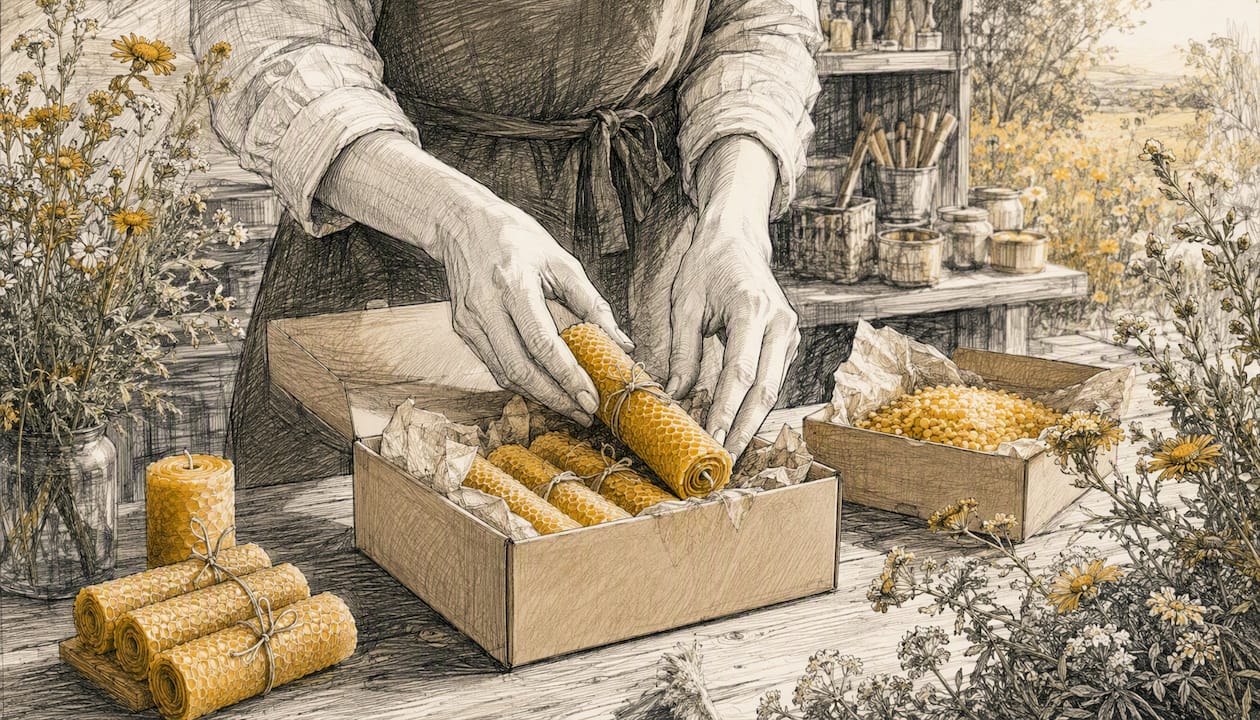
A small candle maker in the Pacific Northwest was importing fragrance oils and specialty waxes via air freight to meet tight reorder cycles. After mapping her supply chain, she identified a regional beeswax supplier within 200 miles and switched to monthly ground-freight deliveries consolidated with other local purchases. Air freight dropped to zero for her primary wax input. The key lesson: consolidating orders and extending lead-time tolerance made the switch feasible without holding excess inventory.
Vignette 2: Reclaimed wood and a co-op buying group
A group of woodworking and mixed-media crafters in the Midwest formed an informal buying co-op to source reclaimed barn wood from local demolition contractors. By pooling orders, they met the minimum quantities contractors required and negotiated consistent pricing. Individual unit costs fell, supply became more predictable, and the group diverted material that would otherwise have gone to landfill. The lesson: collective purchasing solves the minimum-order problem that often blocks individual small makers from accessing local reclaimed materials.
An editorial perspective on local sourcing and craft practice
Running an artisan supply business makes one thing clear: the quality of a supplier relationship determines the quality of the product more reliably than any single material specification. Proximity helps, but it is not sufficient. A local supplier who is unwilling to share processing details or discuss energy use is no more transparent than a distant one. The crafters who get the most from local sourcing treat it as a skill, not a shortcut. They ask better questions, build recurring orders that give suppliers stability, and measure outcomes rather than assuming that “local” automatically means “better.”
The trade-off reality is also worth stating plainly. For some craft inputs, particularly specialty silicone compounds or specific pigments, there is no viable local source in most U.S. regions. Acknowledging that honestly, and focusing local sourcing effort on the materials where it genuinely moves the needle, produces better outcomes than a blanket local-only policy that forces compromises on quality or cost.
Local sourcing improves with practice. Start with one supplier, track one metric, and build from there.
Reusable silicone molds for eco-conscious candle makers
For crafters who want to reduce waste at the production tool level, reusable silicone molds are a practical choice. A single high-quality mold replaces hundreds of single-use alternatives over its lifetime, cutting per-candle material waste significantly.
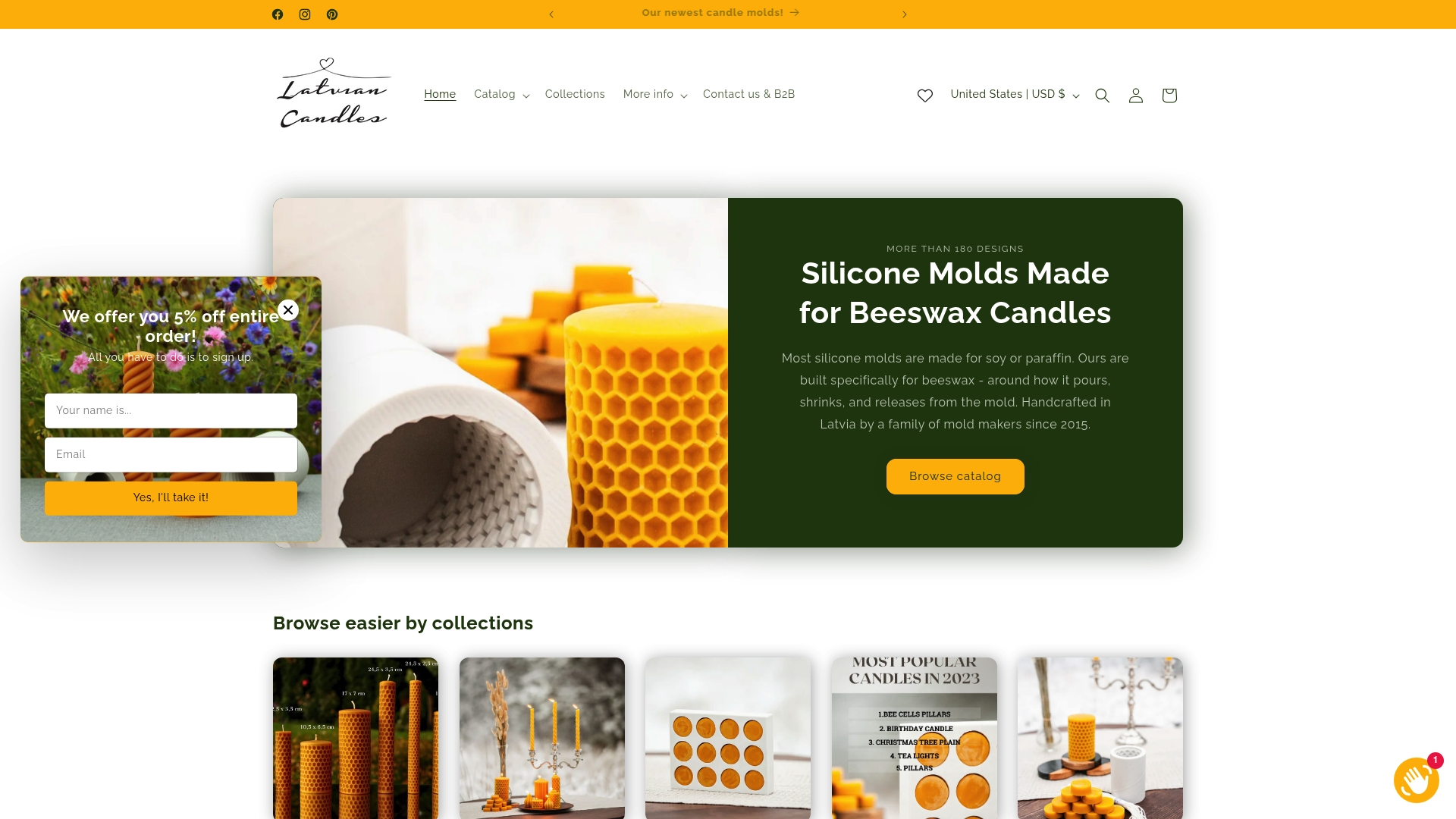
Latviancandles offers over 180 artisan-designed reusable beeswax silicone molds, built specifically for natural beeswax and designed to last through repeated production cycles. The molds are made from durable silicone and are suited to hobbyists and small-batch makers alike. For makers interested in beeswax as a locally sourceable, renewable craft material, the Bees on Cells silicone mold and the full mold catalog are practical starting points. Latviancandles’s fulfillment process is documented transparently on the site. For custom sourcing questions, contact the team directly through the store.
Sources
- The Role of Local Sourcing in Sustainable Creative Practice - Cornford and Cross
- Food-Miles and the Relative Climate Impacts of Food Choices in the United States | Environmental Science & Technology
- How Local Supply Chains Influence Scope 3 Emissions (and when “buy local” backfires) · Coral
- Craft sector sustainability literature review — MDPI
- Study Underscores the Benefits of Buying Local - Vital Communities
FAQ
What does local sourcing do for eco crafters?
Local sourcing reduces transport-related emissions, cuts packaging intensity, and improves supply-chain traceability by enabling direct supplier relationships. It also channels spending into the local economy at a higher recirculation rate than purchasing from national chains.
How does local sourcing contribute to sustainability?
Local sourcing supports sustainability by shortening delivery legs, enabling circular material flows like reclaimed inputs and offcut returns, and making supplier audits more practical. However, the production energy mix at the supplier’s facility often has more climate impact than the delivery distance.
What is eco-friendly sourcing?
Eco-friendly sourcing means selecting materials and suppliers based on environmental and social criteria, including renewable or recycled content, low-carbon production processes, fair labor practices, and third-party certifications such as FSC or GOTS.
Why is locally sourced material better for the environment?
Locally sourced material tends to avoid air freight, reduce packaging, and support circular reuse loops. The environmental advantage is strongest when the local supplier uses cleaner production energy than the previous source and when the switch eliminates expedited or air-freight shipments.
How can a small maker start tracking local sourcing impact?
Tag supplier invoices by location in your accounting software, note shipping method on each order, and track five metrics monthly: local spend percentage, active local supplier count, air-freight avoidance rate, waste diverted in kilograms, and consolidated shipment frequency.


