Candle Labeling Requirements in Latvia: A Compliance Guide
In Latvia, candles sold to consumers count as chemical mixtures whenever they contain fragrance oils, essential oils, dyes, or other hazardous additives, and that triggers CLP and REACH labeling rules on top of standard Latvian consumer-safety requirements. A plain, undyed beeswax candle usually escapes hazard classification, but the moment you add scent or color, you’re likely required to include GHS pictograms, a signal word, hazard and precautionary statements, supplier details, and a Latvian-language label. Get the classification wrong and the fix isn’t a warning. It’s your product pulled from shelves.
TL;DR:
- Candles containing fragrance oils, dyes, or essential oils above 0.1% often require hazard labeling, including GHS pictograms and hazard statements.
- Plain beeswax candles usually escape classification unless additives push them into hazardous categories requiring Latvian-language labels.
- When classified as hazardous, labels must display product name, hazard pictograms, warning signs, hazard and precautionary statements, supplier details, net weight, and UFI code if applicable.
- Proper classification depends on ingredient data sheets and precise concentration calculations, especially for fragrances and allergenic essential oils.
- Standardized packaging and early planning of labels and safety sheets can simplify compliance for small candle makers.
Table of Contents
- What Latvian and EU Rules Cover Candle Labeling?
- When Does a Candle Count as a Hazardous Mixture?
- What Belongs on the Label and Packaging?
- Step-by-Step Compliance Checklist for Small Candle Sellers
- Practical Safety and Labeling Tips From Latvian Candles
- The Small Maker’s Path to Compliance Without Legal Fees
- Latvian Candles: Beeswax Molds Built for Simpler Labeling
- Where to Check the Official Rules Yourself
- Sources
- FAQ
What Latvian and EU Rules Cover Candle Labeling?
Two regulations sit at the center of candle labeling in Latvia: the CLP Regulation (EC 1272/2008) and REACH. CLP governs classification, labeling, and packaging of hazardous mixtures. REACH governs the substances themselves, including registration duties for manufacturers and importers who bring chemical ingredients into the Latvian market.
Veselības inspekcija has stated plainly that candles fall under mixture rules, and that classification depends entirely on what’s inside the wax, not the wax itself. Beyond CLP, general Latvian consumer-protection law still applies to every candle sold here, hazardous or not: accurate marketing claims, clear contact information, and honest quantity labeling.
Three bodies matter most for a Latvian candle maker:
- Veselības inspekcija oversees chemical safety compliance and investigates mislabeled or mislabeled-as-safe products.
- LVĢMC (Latvian Environment, Geology and Meteorology Centre) receives annual chemical and mixture reporting from producers and importers.
- Consumer protection authorities handle complaints tied to misleading claims, pricing, and general product information.
Standards like LVS EN 15494 also apply, covering candle-specific fire and burn safety even though CE marking itself doesn’t extend to candles.
When Does a Candle Count as a Hazardous Mixture?
Classification runs on the full formula, not the base ingredient. A candle poured from raw, undyed beeswax with a cotton wick typically has no CLP obligations. Add a fragrance oil, and the calculation changes immediately, because any fragrance or essential oil can shift the mixture’s legal classification depending on what’s in it and how much.
Threshold to know: A candle containing 0.1% or more of a category 1 skin sensitizer must carry the GHS07 pictogram and the H317 statement, “May cause an allergic skin reaction.” That’s a tiny fraction of total wax weight, well within range for a moderately scented candle.
Run through three common scenarios:
- Plain beeswax, no additives: generally outside CLP scope, but consumer-safety rules still apply.
- Scented with synthetic fragrance oil: often triggers classification depending on the fragrance’s own hazard profile and concentration.
- Dyed or blended with essential oils: frequently pushes past sensitizer thresholds, especially with citrus, cinnamon, or clove-derived oils known for allergenic potential.
You can’t eyeball this. The only reliable path is checking each ingredient’s safety data sheet against its declared concentration in your finished candle.
What Belongs on the Label and Packaging?
Once your candle classifies as hazardous, the label has to include a specific, non-negotiable set of elements. Miss one and the label doesn’t meet CLP standards, regardless of how good the rest looks.
- Product identifier — the name buyers will recognize and match to your safety data sheet.
- GHS pictograms — the red-bordered diamond symbols matching your hazard classification (skin irritant, sensitizer, and so on).
- Signal word — either “Warning” or “Danger,” depending on severity.
- Hazard statements (H-phrases) and precautionary statements (P-phrases) — the specific risk language and handling instructions.
- Supplier name and address — your business, not a supplier’s, unless you’re reselling under their name.
- Nominal quantity — net weight or volume, clearly stated.
- UFI code — required when your product falls under poison-center notification rules, paired with a PCN submission.
Every one of those elements needs to appear in Latvian. Kompetences Centrs confirms that mixture labels sold in an EU member state must use that state’s official language, though a multilingual label that includes Latvian alongside other languages is acceptable.
Pictograms need to stay legible at actual label size, not shrunk into decoration. And because labels can’t be printed directly onto burnable wax, your packaging design has to physically accommodate a compliant label, whether that’s a wraparound sleeve, a jar label, or a tin lid.
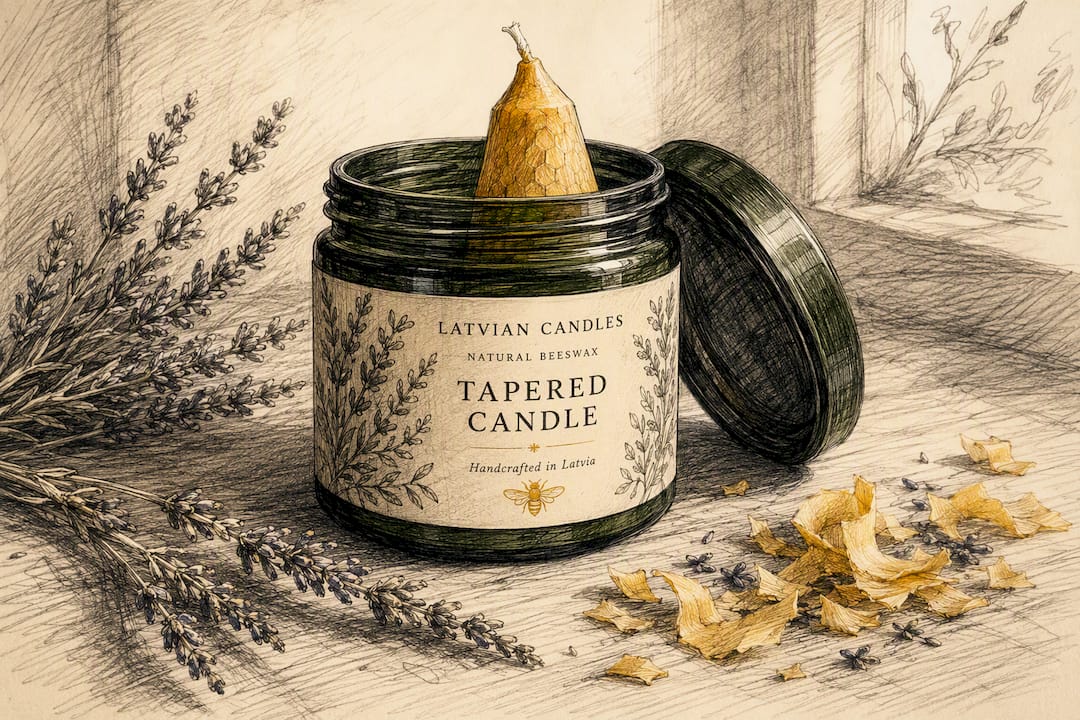
Pro Tip: Choose your packaging before you finalize your fragrance blend. A jar or tin that already has label space solves half your compliance headache before you’ve classified a single ingredient.
If your candle classifies as hazardous, you also need a safety data sheet on file, covering composition, hazard identification, handling, and disposal. You don’t have to publish it, but you must produce it on request from an inspector or a business customer.
Step-by-Step Compliance Checklist for Small Candle Sellers
Compliance stops being abstract once you break it into an order of operations.
- Gather supplier documentation first. Request safety data sheets and concentration breakdowns for every fragrance oil, essential oil, and dye before you finalize a recipe. You can’t classify what you can’t quantify.
- Decide who classifies your product. Self-classification works if you’re comfortable reading harmonized hazard data and doing the math on concentrations. If not, industry guidance recommends hiring a specialist rather than guessing, since a mislabeled product can mean removal from sale.
- Build the label and supporting documents. Draft your CLP label in Latvian, prepare a safety data sheet if required, generate a UFI code, and file a PCN submission if your formulation needs poison-center notification.
- File your reporting obligations. Producers and importers of chemical mixtures may owe annual reporting to LVĢMC. Mark the deadline on your calendar the same week you start selling.
- Simplify where you can. Limiting fragrance concentration, adding a standard “keep out of reach of children” line, and choosing packaging that accepts labels cleanly all reduce your ongoing compliance workload.
Pro Tip: Keep a dated file for every batch, ingredient sourcing document, and label version. If your formulation ever changes, even slightly, that paper trail is what proves you updated the label to match, rather than sold an old label against a new recipe.
Reformulating? Treat it as a full reclassification, not a tweak. A new fragrance supplier, a different essential oil blend, or a changed dye concentration can shift you across a hazard threshold you’d already cleared with the old recipe.
Practical Safety and Labeling Tips From Latvian Candles
Founded in 2015, our family has spent a decade making beeswax candles in Latvia, and a few lessons from that stretch apply directly to labeling.
- Say “natural” only when you can back it up. A candle blended with synthetic fragrance and colorant isn’t “100% natural,” and reporting on the Latvian market has flagged producers who overstate safety claims on scented products. State your actual ingredient list, not a marketing gloss.
- Skip lead-core or metal-core wicks. Cotton or wood wicks avoid a whole category of regulatory scrutiny around heavy metals.
- Choose packaging that takes a label cleanly. Glass jars and tins solve the “labels can’t sit on wax” problem before it becomes one.
- Use your own product pages to educate, not just sell. Our candle-making blog walks through wax selection and burn safety, the kind of context that builds trust alongside a compliant label.
The Small Maker’s Path to Compliance Without Legal Fees
Full-service compliance consultants exist, but most Latvian hobbyists and small sellers don’t need one on day one. A label template covers most straightforward cases: single fragrance, known concentration, standard packaging. Save the professional classifier or translator for edge cases, like blended essential oil formulas with overlapping sensitizer risks, where getting the H-phrase wrong carries real consequences.
Prioritize in this order: ingredient disclosure first, Latvian-language label text second, packaging format third. That sequence closes your biggest enforcement risk fastest. Batch sizes under a few dozen units still need the same label rigor as a production run. Nobody scales down CLP.
— Marks
Latvian Candles: Beeswax Molds Built for Simpler Labeling
Choosing your mold shape and pack size before you write a single label saves you real time. Latvian Candles makes over 180 silicone mold designs specifically for beeswax, and standardized shapes like our bee cells tea lights or bee cells pillar molds produce consistent, repeatable candle weights every pour.
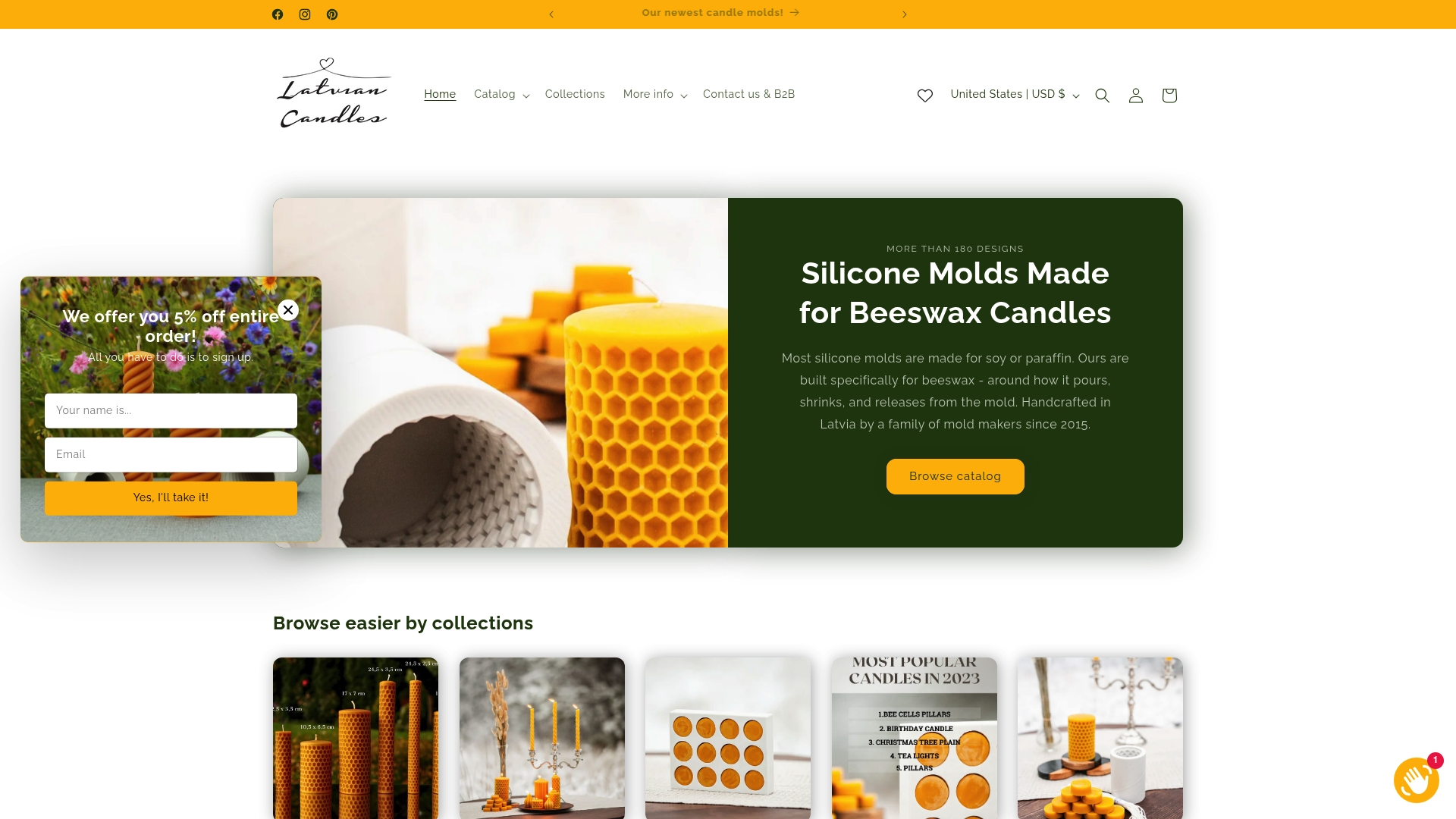
That consistency matters more than it sounds. A candle line with wildly different weights across batches means you’re rewriting the nominal quantity on every label variant. A standardized mold means one weight, one label, one less thing to double-check before a batch ships. Pair a mold with our DIY candle-making starter kit if you’re setting up your first product line, since it’s built around the same repeatable format from day one. Browse the mold collection, pick a shape that matches your packaging plan, and build your label around a candle size you’ll actually keep producing.
Where to Check the Official Rules Yourself
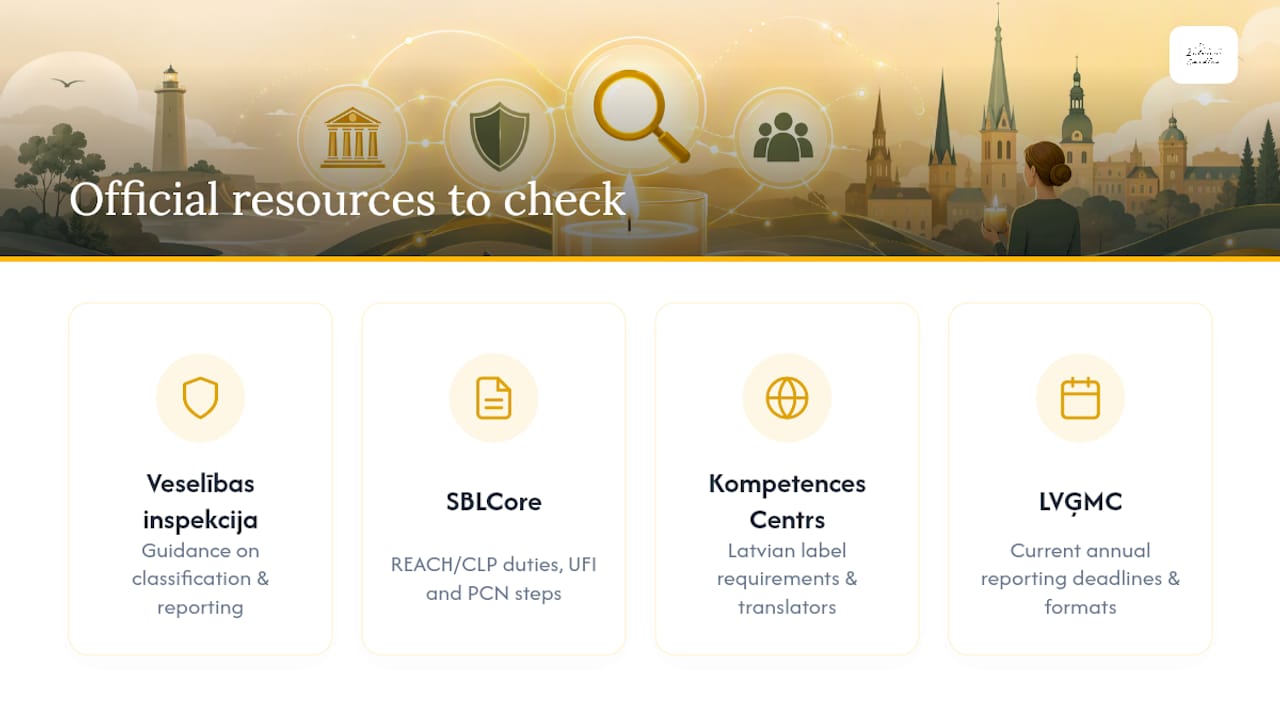
Start with Veselības inspekcija’s own guidance for classification basics and reporting expectations specific to candle producers. SBLCore’s breakdown of REACH and CLP duties covers UFI and PCN steps in more technical detail than most government pages offer.
For label language requirements and translation help, Kompetences Centrs lists what a compliant Latvian-language label needs and where to get professional translation. Check LVĢMC’s own site directly for current annual reporting deadlines and submission formats before your first filing.
This article is general information, not a substitute for advice from a qualified lawyer. Consult a qualified legal professional about your own circumstances before acting on anything here.
Sources
- Sveču ražotājiem svarīga informācija | Veselības inspekcija
- Smaržīgo sveču un difuzoru ražotāju pienākumi ES saskaņā ar REACH un CLP | SBLCore
- Kompetences Centrs - Marķējums / Etiķetes
FAQ
Does every candle sold in Latvia need a CLP label?
No. Only candles classified as hazardous mixtures, typically due to fragrance, essential oils, or dyes above certain concentrations, need full CLP labeling. Plain beeswax candles usually don’t qualify, but still need to meet general Latvian consumer-safety and quantity-labeling rules.
What is a UFI code and when do I need one?
A UFI (Unique Formula Identifier) links your product to a poison-center notification (PCN) filing, required when your candle’s fragrance mixture meets notification thresholds under CLP. Plain, unscented candles typically don’t need one.
Can I sell candles in Latvia with an English-only label?
No. Labels for chemical mixtures sold in Latvia must include Latvian-language text, though a multilingual label that includes Latvian alongside other languages is acceptable.
Do I need a safety data sheet for a scented candle?
If your candle classifies as a hazardous mixture under CLP, yes, you need an SDS on file covering composition, hazards, handling, and disposal, available on request even if you don’t publish it publicly.
How can I reduce labeling complexity as a small maker?
Standardize your candle sizes and packaging early, since consistent formats simplify the nominal quantity element of your label and cut down on the number of label variants you need to manage across a product line.
Who do I contact in Latvia for candle labeling questions?
Veselības inspekcija handles chemical classification and safety compliance questions, while LVĢMC manages annual chemical and mixture reporting obligations for producers and importers.


