
Artisan Brand Differentiation: A Practical Maker's Guide
Artisan brand differentiation is the set of storytelling, craft, and identity choices that make a maker’s work unmistakable and justify a price premium over mass-produced alternatives. Three signals create it:
- Storytelling: The maker narrative, origin, and provenance that explain why the work exists and who made it.
- Craftsmanship: Visible process, materials, technique, and scarcity signals that prove the claim.
- Identity: Consistent visual and sensory codes, packaging, and community that reinforce recognition at every touchpoint.
When these three signals align, buyers stop comparing on price alone. A candle made from single-origin beeswax, poured in a documented process, and sold with a clear maker story reads as a different category of product than a generic candle at the same weight. That perceptual gap is what artisan brand differentiation produces.
Key Takeaways
Artisan brand differentiation works when storytelling, craft signals, and identity choices align to create a specific, credible position that buyers cannot find from a mass-market alternative.
| Point | Details |
|---|---|
| Three core signals | Storytelling, craftsmanship, and identity must align for differentiation to reduce price sensitivity. |
| Kantar’s uniqueness finding | Brands with higher relative uniqueness show a measurable increase in consumers’ willingness to pay more. |
| Six-step framework | Audit, position, story, touchpoints, pricing, and measurement form a 30–90 day execution plan. |
| Single positioning focus | Pick one niche audience or technique; if a large manufacturer can claim it, it is not specific enough. |
| Biggest pitfall | Decorative storytelling and vague positioning are the most common reasons differentiation fails to improve conversion. |
Table of Contents
- Why does differentiation matter for artisan brands in the U.S.?
- What are the core elements artisan brands use to stand out?
- How do you build artisan brand differentiation step by step?
- What do real differentiation patterns look like for makers?
- What does research say about differentiation and distinctiveness?
- How do you measure whether differentiation is working?
- What mistakes do artisan brands make when trying to differentiate?
- What should you do in the next 30 and 90 days?
- A maker’s perspective on differentiation
- Sources
- FAQ
Why does differentiation matter for artisan brands in the U.S.?
The U.S. market rewards specificity. Buyers of artisan goods increasingly seek provenance, sustainability, and a human story behind what they purchase. That preference is not sentimental; it is commercial. Kantar’s analysis of 40,000 brands found a strong relationship between increasing relative uniqueness and consumers’ willingness to pay more, which directly translates to better margins and lower price sensitivity for makers who invest in differentiation.
The flip side is equally clear. Frontify’s brand guidance shows that failing to differentiate leaves digital experiences indistinguishable from competitors, raising customer acquisition costs and weakening retention. For a small maker with a limited marketing budget, that is a structural disadvantage.
U.S. consumers buying handcrafted goods also use those purchases to signal identity and community membership. Research on artisan branding describes this as self-authentication: buyers choose artisan products partly to communicate who they are. Brands that enable that social identity capture stronger attachment and repeat purchase behavior than brands that compete only on aesthetics.
Practically, this means the tactical choices a maker controls directly, such as the story on a product page, the scarcity of a limited run, and the consistency of photography, are not decorative. They are the mechanism by which differentiation reduces price sensitivity and builds a customer base that is worth acquiring.
What are the core elements artisan brands use to stand out?
Maker story and origin
The origin story is product context, not biography. It answers a specific buyer question: why does this exist, and why should I trust it? A story that names a place, a material source, or a generational practice gives buyers a reason to pay more. Qualitative research on craft entrepreneurs confirms that storytelling and personal brand are the central themes makers use to build trust and loyalty.
Visible craftsmanship and technique
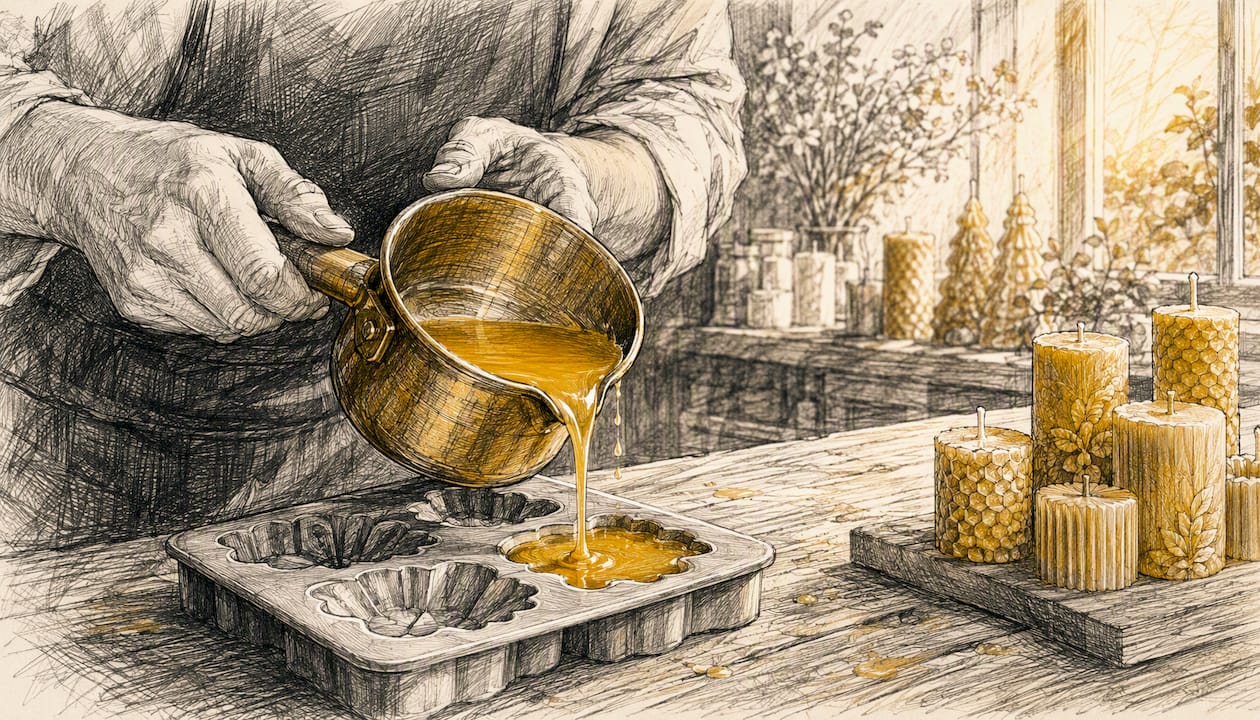
Process visibility matters. Showing the mold, the pour, the finishing step, or the tool marks is not just photography; it is proof. Buyers cannot verify craftsmanship claims without evidence, so the documentation of technique is itself a brand asset. This is where artisan jewelry brands, for example, use technique-oriented storytelling to separate handmade from machine-made at a glance. The same logic applies to any category where the making process is genuinely distinct.
Materials and provenance
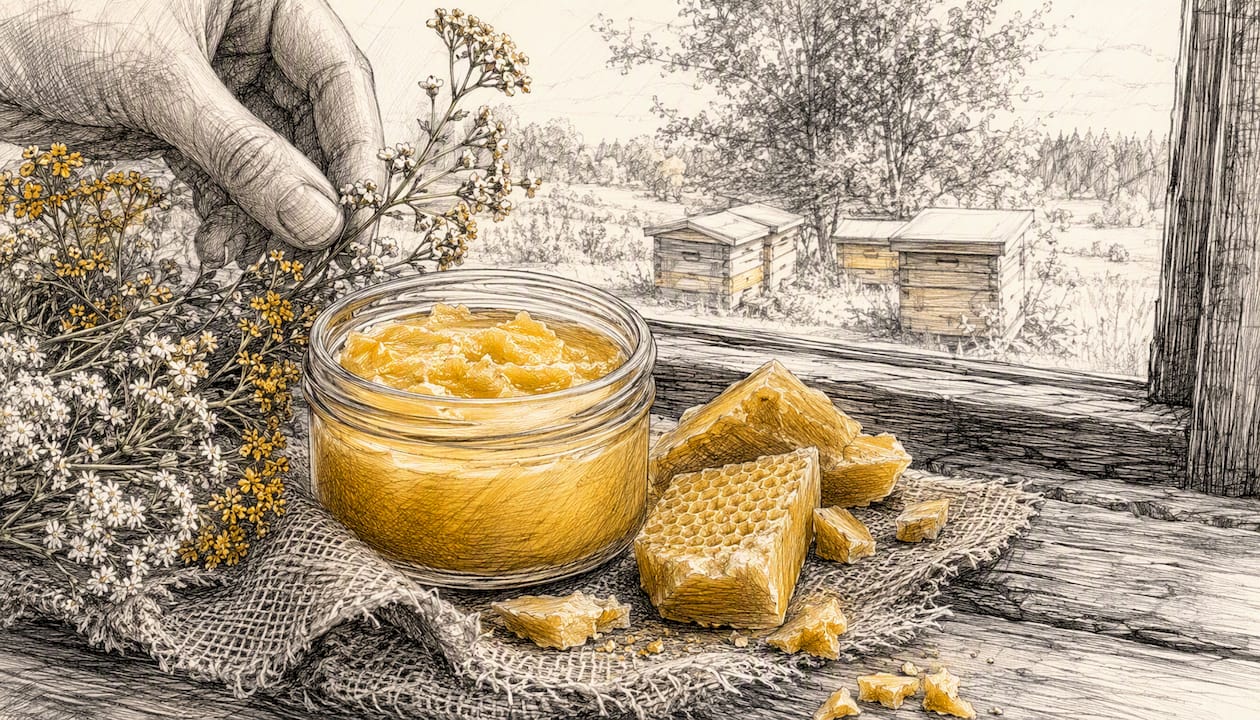
Where materials come from is a differentiator when it is specific and verifiable. “Natural beeswax” is a claim. “Beeswax sourced from Latvian apiaries, tested for purity” is a position. Specificity converts a generic attribute into a credible signal. The scholarly synthesis on artisan branding identifies provenance as one of the four core authenticity signals, alongside aura, scarcity, and continuity.
Limited runs and scarcity
Scarcity is a pricing tool as much as a production reality. A limited seasonal mold design or a numbered batch communicates that the product will not always be available, which shifts buyer behavior from “I’ll come back” to “I should get this now.” Scarcity also reinforces the handmade claim because it implies genuine capacity constraints.
Sensory and visual codes
Consistent photography style, color palette, and texture cues train buyers to recognize the brand before they read a word. A maker who photographs products on raw linen with natural light reads differently than one who uses a white studio backdrop. Neither is wrong, but only one of them is a deliberate identity choice. The visual system should match the material story.
Packaging and unboxing
Packaging is the first physical touchpoint after purchase. A kraft paper wrap with a handwritten note costs little but signals care. A printed insert that names the maker and explains the material extends the story into the buyer’s home. These details compound over time into a reputation for quality.
Distribution choices
Where a product is sold is a positioning statement. A maker who sells exclusively through their own site and two curated boutiques signals scarcity and curation. One who lists on every available marketplace signals availability. Maker-focused brand strategy guidance is direct on this point: positioning for the right customers, not maximum reach, is the central task.
Community and experiences
Workshops, maker newsletters, and patron lists convert buyers into participants. A buyer who has attended a candle-making workshop with a maker has a relationship that no discount can replicate.
Pro Tip: Document your process in short video clips or photo sequences during production. These assets serve double duty: they are proof of craftsmanship for product pages and content for community channels, with no additional production cost.
How do you build artisan brand differentiation step by step?
This six-step framework runs in 30–90 days for most small makers.
-
Run a brand audit. Ask five questions: What do buyers say when they describe your product to a friend? What do you say? Where do those answers differ? Which touchpoint (product page, packaging, photography, pricing) looks least consistent with your intended position? Use the five brand pillars, purpose, personality, promise, positioning, and perception, as a structured audit framework and fix the weakest pillar first.
-
Choose one positioning focus. Pick either a niche audience (beeswax candle makers who want botanical shapes) or a specific technique (hand-poured single-origin beeswax in heritage mold designs). Trying to own both simultaneously dilutes both. The rule: if a large manufacturer could credibly claim your position, it is not specific enough.
-
Build the maker narrative. Write one paragraph that answers: who made this, where, from what, and why does it matter to the buyer? Treat it as product context. Forbes analysis of oversaturated markets is clear that cosmetic changes, such as a new color palette or a mission statement, are not differentiation. The narrative must be specific and integrated into every touchpoint.
-
Map and prioritize touchpoints. List every place a buyer encounters the brand: product page, packaging, email, social, markets. Rank them by buyer volume. Refresh the highest-traffic touchpoint first with new photography and story copy. A single well-executed product page outperforms five mediocre ones.
-
Align pricing and offer design. Price communicates position. A limited run priced at a premium signals scarcity and craft. A permanent product discounted regularly signals commodity. Design offers, such as numbered editions, seasonal bundles, or maker kits, so the price structure reinforces the story. Handcrafted attributes require context to justify price; the offer design is that context.
-
Run small experiments and measure. Test one messaging change on a landing page. Launch one limited run and track sell-through rate. Monitor average order value before and after a packaging upgrade. These experiments generate real data on whether differentiation is reducing price sensitivity.
Pro Tip: Before writing your maker narrative, read your last ten customer reviews or messages. The language buyers use to describe your product is often more accurate and more compelling than the language you use to describe it yourself.
What do real differentiation patterns look like for makers?
Three repeatable templates cover most maker situations.
Template A: Single-product premium launch
A maker introduces a limited run of 50 units of a new mold design. Each unit ships with a card naming the design’s origin, the material specification, and the batch number. The product page shows the mold in production, not just the finished candle.
Assets required:
- Process photography (3–5 images showing the mold being made or used)
- One-paragraph origin story for the product page
- Scarcity mechanism (numbered batch, fixed quantity, no restock)
- Pricing anchor (a standard product at a lower price makes the edition’s premium legible)
Template B: Shop-level specialist positioning
A maker repositions the entire shop around a single material or technique. Instead of “handmade candles,” the positioning becomes “beeswax candles made with heritage Baltic mold designs.” Every product page, the about section, and the packaging all reference the same specific claim. New buyers arrive already pre-sold on the category.
Assets required:
- Revised shop tagline and about copy
- Consistent photography style across all listings
- One cornerstone blog post explaining the technique or material in depth
- Distribution review: remove or de-emphasize listings that contradict the specialist position
Template C: Community-driven growth
A maker launches a monthly newsletter for buyers who have purchased more than once. The newsletter covers the making process, upcoming limited runs, and material sourcing decisions. Subscribers get first access to new designs. Over time, this list becomes the primary sales channel for new releases.
Assets required:
- Email platform with segmentation capability
- A simple welcome sequence explaining the maker’s story
- A first-access offer for subscribers (early purchase window, not a discount)
- Consistent send cadence (monthly is sufficient to start)
Artisan jewelry brands use the same community logic effectively. Artisan jewelry craftsmanship guides show how technique-oriented storytelling converts category interest into brand loyalty across maker categories. The mechanism transfers directly to candle making, ceramics, or any craft where the process is genuinely distinct.
What does research say about differentiation and distinctiveness?
The evidence base for differentiation is strong but more nuanced than most guides acknowledge.
Kantar’s 40,000-brand analysis is the most cited data point: brands with higher relative uniqueness show a measurable increase in consumers’ willingness to pay. For artisan makers, this is the commercial case for investing in story and craft signals rather than competing on price.
However, academic research on perceived brand differentiation complicates the picture. What drives those purchases is often distinctiveness, meaning easy recognition, rather than a consciously held belief that the brand is superior. The practical implication for makers: both matter. Differentiation (a specific, credible position) sustains the reflective justification for paying more. Distinctiveness (a recognizable visual and sensory system) speeds the choice at the moment of purchase.
The scholarly synthesis on artisan branding adds a third layer: authenticity signals, specifically narrative, scarcity, provenance, and continuity, create consumer attachment that goes beyond rational comparison. Buyers of artisan goods are not always comparing features; they are choosing a relationship with a maker.
Forbes experts warn that many brands confuse cosmetic changes for real differentiation. A new logo or a sustainability tagline does not constitute a position. Differentiation must be integrated: the story, the product, the price, and the distribution all point to the same specific claim.
How do you measure whether differentiation is working?
Differentiation is not measurable in a single metric. Track a small set of KPIs that together show whether buyers are responding to the position.
| KPI | What it measures | How to calculate | Reporting cadence |
|---|---|---|---|
| Average order value (AOV) | Whether buyers are spending more per transaction | Total revenue ÷ number of orders | Monthly |
| Repeat purchase rate | Whether differentiated buyers return | Orders from returning customers ÷ total orders | Monthly |
| Conversion rate by source | Whether story-led traffic converts better | Orders ÷ sessions, segmented by source | Weekly |
| Email open and click rate | Whether the maker narrative engages the list | Opens ÷ delivered; clicks ÷ opens | Per send |
| Price elasticity signal | Whether discounts are the primary growth lever | Compare revenue in discount vs. non-discount periods | Quarterly |
| Customer acquisition cost (CAC) | Whether differentiation reduces paid spend needed | Total marketing spend ÷ new customers acquired | Monthly |
Recommended experiments to run alongside tracking:
- A/B landing page test: Run two versions of a product page, one with a full maker story and process photography, one without. Measure conversion rate difference over 30 days.
- Limited-run pricing test: Price a new limited edition 25% above your standard line. Track sell-through rate and time to sell out versus a standard product launch.
- Curated vs. broad listing test: Remove the three lowest-margin products from one channel and measure whether AOV increases without a drop in total revenue.
Dashboard components to build first: sales by product (to identify which items carry the differentiation story best), conversion rate by acquisition source (to see whether organic/story-led traffic outperforms paid), and cohort repeat rate (to confirm that differentiated buyers return at a higher rate than average).
Forbes reporting on brand storytelling notes that personalized communications, including emails with specific maker content, produce better engagement than generic product announcements. That engagement signal is a leading indicator of differentiation working before it shows up in revenue.
What mistakes do artisan brands make when trying to differentiate?
Most differentiation failures fall into a small number of patterns.
- Vague positioning. “Handmade with love” is not a position. It describes a process attribute that hundreds of thousands of makers share. A position names a specific audience, material, technique, or occasion that the brand owns.
- Decorative storytelling. A maker story that describes the founder’s passion without explaining what problem the product solves for the buyer is decoration, not differentiation. The story must connect to the buyer’s reason to purchase.
- Overextending the product line. Adding new categories to capture more buyers dilutes the specialist signal. A shop that sells beeswax molds, soy candles, bath bombs, and greeting cards reads as a general craft store, not a specialist.
- Price signals that contradict positioning. Running frequent discounts on a product positioned as premium tells buyers the real price is the sale price. Price is a positioning statement; treat it as one.
- Inconsistent photography or copy. A product page with professional photography next to one with a phone snapshot breaks the visual identity. Inconsistency signals that the brand is not fully committed to its own position.
- Legal overclaims. Do not claim “100% handmade,” “certified organic,” or specific geographic origin without documentation to support it. The Federal Trade Commission has guidance on “Made in USA” claims, and state consumer protection laws cover misleading provenance statements. Use only claims you can verify and document.
Red flags in metrics: high traffic with low conversion usually means the positioning is unclear at the product page level. Discounting becoming the primary growth lever means differentiation has not yet reduced price sensitivity.
What should you do in the next 30 and 90 days?
30-day actions
- Run a five-question brand audit: What do buyers say? What do you say? Where do they differ? Which touchpoint is weakest? Which product best represents your position?
- Write one maker story paragraph. Name the origin, the material, and the buyer problem it solves. Place it on your highest-traffic product page.
- Refresh that product page with three to five process photographs showing the making, not just the finished product.
- Set one pricing experiment: price your next restock or new listing 15–20% above your current standard and track conversion for 30 days.
90-day actions
- Launch one limited run with a numbered batch, a specific origin story, and a premium price point. Track sell-through rate and time to sell out.
- Build a simple measurement dashboard covering AOV, repeat purchase rate, and conversion rate by source. Review it monthly.
- Set up one community touchpoint: a newsletter segment for repeat buyers, a workshop announcement, or a first-access list for new releases. Send one piece of maker content before the 90-day mark.
A maker’s perspective on differentiation
The frameworks in this article are useful, but they only work when the maker has genuine clarity about what makes the work specific. Generic positioning advice, such as “tell your story” or “add value,” does not help a maker who has not yet decided what their work is actually for.
At Latviancandles, that clarity came from a specific material choice and a specific audience. The family’s candlemaking background is not a marketing device; it is the reason the mold designs exist in the form they do. When a maker can point to a real origin, a documented process, and a specific buyer problem, the differentiation work becomes a matter of documentation and consistency rather than invention.
For candle makers specifically: beeswax provenance is a credible differentiator because most buyers cannot verify it independently, which means documentation, such as a named supplier, a region, or a purity standard, converts a generic claim into a verifiable one. Mold design is also a brand asset, not just a production tool. A signature shape, like a bee cell pattern or a heritage Baltic motif, is recognizable across product lines and creates visual distinctiveness that speeds buyer recognition. The fulfillment and shipping process is another touchpoint where transparency builds trust, particularly for buyers purchasing from outside the U.S.
The single most common mistake makers make is waiting until the product line is larger or the brand feels “ready” before investing in differentiation. The audit, the story, and the first pricing experiment can all be done with one product and one product page. Start there.
Sources
- Is brand differentiation an effective way to reduce customer price sensitivity
- What is brand differentiation? + 10 examples - Frontify
- Introduction to The Artisan Brand
- Brand Strategy for Makers: Positioning a Handmade Business — Pho Marketing
FAQ
What does “artisan brand” mean?
An artisan brand is one that signals authenticity through a documented maker identity, specific materials or techniques, and limited production. The term implies human craft, provenance, and a traceable origin rather than mass manufacturing.
What does brand differentiation mean?
Brand differentiation is the set of choices that make one brand’s product or experience distinct from alternatives in the same category. For artisan brands, it typically rests on storytelling, craft signals, and identity rather than price or distribution scale.
What are examples of artisan products?
Artisan products include handcrafted candles, small-batch ceramics, hand-poured beeswax molds, artisan jewelry, and specialty food items where the maker’s process, materials, and origin are central to the product’s value. The artisan amber necklace is one example of how provenance and handcraft combine in a physical product.
Can you give an example of brand differentiation for a maker?
A candle maker who sells “beeswax candles” is undifferentiated. One who sells “single-origin beeswax candles poured in numbered batches using heritage Baltic mold designs” has a specific, credible position that justifies a price premium and attracts buyers who value provenance and craft over convenience.
How does artisan brand differentiation reduce price sensitivity?
Kantar’s research shows that higher relative uniqueness correlates with greater willingness to pay. When buyers perceive a product as genuinely distinct, they compare it less directly to lower-priced alternatives, which reduces the pressure to discount.


