What Is a Curated Natural Goods Store for Candle Makers
A curated natural goods store for beeswax crafters is an online shop that handpicks beeswax-focused supplies — specifically handcrafted silicone molds, natural wicks, sustainably sourced beeswax, and related accessories — selected to meet the precise needs of hobbyist and small-batch candle makers. The term “curated” here is not a marketing label. It signals a deliberate selection process: every product passes sourcing, material, and usability checks before it reaches the shop.
Three quick signals confirm a store is genuinely curated:
- Material specification: Molds are labeled food-grade silicone or PTFE-free; wax is listed as 100% pure beeswax with filtration level stated.
- Provenance detail: Wax origin is named — region, apiary type, or rescued-hive status.
- Product depth: Each listing includes pour volume, wick size recommendation, and release instructions, not just a photo and a price.
Key Takeaways
A curated natural goods store for beeswax makers stocks handpicked silicone molds, traceable beeswax, and compatible wicks — each selected against material, sourcing, and usability standards that generic craft suppliers skip.
| Point | Details |
|---|---|
| Definition | A curated beeswax supply store handpicks molds, wax, and wicks against material and sourcing standards. |
| Top buyer checks | Verify silicone grade, wax filtration level, and wick fiber type before purchasing any item. |
| Mold sizing | Common beeswax pillar molds finish around 2¼" x 6" and use roughly 9.8–11.8 oz of wax per pour. |
| Sourcing transparency | Rescued-hive or locally harvested wax should name the region, apiary type, and filtration method. |
| Latviancandles | Offers 180+ handcrafted silicone mold designs with full product specs, tutorials, and starter kits for U.S. buyers. |
Table of Contents
- What does ‘curated’ actually mean for a beeswax supply shop?
- What product families does a beeswax-focused curated store stock?
- How do you choose the right molds and supplies for your scale?
- How to use and care for silicone molds with beeswax
- What sourcing and sustainability details should you expect from a curated store?
- What should U.S. buyers expect on pricing, availability, and shipping?
- Why this collection was assembled this way
- Latviancandles: handcrafted silicone molds for beeswax makers
- Sources
- FAQ
What does ‘curated’ actually mean for a beeswax supply shop?
Curation in a beeswax-focused natural goods store means the seller has applied specific selection criteria before listing a product. Sustainability is one filter. A shop that sources rescued-hive wax, for example, recovers wax from hives that would otherwise be destroyed, reducing waste and supporting local bee populations. Maker partnerships are another filter: products come from identifiable artisans or apiaries, not anonymous bulk distributors.
Material specs are non-negotiable in a properly curated store. Silicone molds should carry a food-grade or PTFE-free designation. Wicks should specify fiber type and diameter range. Beeswax listings should state whether the product is filtered, double-filtered, or raw, and whether it comes in block or pellet form.
Quality checks behind the scenes include sample testing for mold release, burn tests for wick performance, and repeated-use durability assessments. Transparency requirements follow: origin, filtration level, and packaging claims should all appear on the product page, not buried in a FAQ.
Pro Tip: Before buying from any curated store, search the product page for three data points: silicone grade, wax filtration level, and wick fiber type. If any of those are missing, the curation claim is incomplete.
What product families does a beeswax-focused curated store stock?
A well-stocked curated store carries five product families. Each has specific technical features worth checking before purchase.
Silicone molds
Silicone molds are the core product. They flex for easy release, preserve fine surface detail, and hold up through repeated pours. Common shapes include honeycomb, pillar, taper, tea light, and holiday designs. Common beeswax pillar molds typically finish about 2¼" x 6" and use an amount of wax appropriate for that size. Check for food-grade labeling and confirm the mold lists a recommended wick diameter.

Beeswax
Pellets melt faster than blocks and are easier to measure accurately, which matters for consistent batch output. Pellets are the preferred form for hobbyists using a double boiler because they reduce melt time and simplify weighing. Provenance matters: rescued-hive wax and locally harvested wax carry different environmental profiles.

Wicks
Square-braided cotton wicks are the standard recommendation for beeswax candles. Hemp wicks are a natural alternative. Sizing ties directly to mold diameter: a wick rated for a 2" diameter pillar will not perform correctly in a 3" mold.
Starter kits and accessories
A practical starter kit includes a thermometer, wick-centering tool, and at least one silicone mold. Avoid kits that substitute a candy thermometer for a digital one — temperature precision matters with beeswax.
| Product | Key spec to check | Typical size or form |
|---|---|---|
| Silicone pillar mold | Food-grade label, wick diameter note | ~2¼" x 6", ~9.8–11.8 oz wax |
| Beeswax pellets | 100% pure, filtration level | 1 lb bags standard |
| Cotton wick | Square-braided, diameter rating | Sized to mold diameter |
| Starter kit | Digital thermometer included | Mold + wick + tool bundle |
How do you choose the right molds and supplies for your scale?
Scale determines which products make sense. A hobbyist making 6–12 candles per month needs one or two mold designs, a small wax supply, and a basic kit. A small-batch maker producing 50+ units per month needs molds rated for high repeat use, bulk wax options, and consistent wick sizing across designs.
- Batch size: Single-cavity molds work for hobbyists. Multi-cavity molds or buying several identical molds speeds up small-batch production.
- Mold type by use case: Tapers require a long, narrow cavity and a thin wick. Pillars need a wider diameter and a heavier wick. Tea lights use shallow molds and short wicks.
- Durability: Silicone shore hardness affects how easily a mold flexes for release. Softer silicone releases intricate detail more cleanly. Metal molds last longer under high-volume production but require a release agent and more careful unmolding.
- Buyer questions to ask: Does the seller list material specs on the product page? Is there a return policy for defective molds? Are bulk discounts available for repeat orders?
Pro Tip: For small-batch makers, buy two identical molds before committing to a full set. Run 10 pours each and check release consistency, surface detail retention, and cleaning time before scaling up.
How to use and care for silicone molds with beeswax
- Melt safely. Use a double boiler — never direct heat. A digital thermometer is required. Beeswax pours well between 145°F and 165°F. Above 185°F, quality degrades and flash point risk increases.
- Set the wick. Center the wick using a wick bar or pencil laid across the mold top. Secure the base with a wick sticker or small amount of cooled wax.
- Pour slowly. Fill in a single steady pour. Beeswax shrinks slightly as it cools, so a small top-up pour after the first layer sets is standard practice.
- Cool completely. Allow the candle to reach room temperature before unmolding. Rushing this step damages fine surface detail.
- Unmold gently. Flex the silicone mold outward from the base, not the top. Pull the candle straight out rather than twisting.
- Clean the mold. Wipe residual wax with a warm cloth. For stuck wax, place the mold in a warm oven (170°F) for a few minutes, then wipe clean. A warm-water rinse follows. Avoid abrasive scrubbers.
- Store flat. Keep molds away from dust and direct sunlight. Stack them flat or hang them; folding creates permanent creases.
Safety note: Beeswax has a flash point around 400°F, but overheating still degrades the wax and produces fumes. Always work in a ventilated space, use a heat-resistant work surface, and keep a fire extinguisher accessible. Never leave melting wax unattended.
What sourcing and sustainability details should you expect from a curated store?
Sourcing claims vary widely. Here is what each common term actually means and what to verify:
- Rescued-hive wax: Wax recovered from hives slated for removal or destruction. Verify by asking for the region of origin and whether the seller partners with a named bee rescue program.
- Locally harvested: Wax sourced from apiaries within a defined region. Ask for the state or region and whether the apiary uses treatment-free or low-intervention practices.
- Filtered vs. unfiltered: Filtered wax has had pollen, propolis, and debris removed. Double-filtered wax is cleaner still and produces a lighter-colored candle. Unfiltered wax retains more natural scent and color variation.
- Conservation signals: Shops aligned with bee conservation may partner with local rescue programs, include wildflower seed mixes or habitat products, or donate a portion of sales to pollinator initiatives.
Traceability documentation is the clearest trust signal.
What should U.S. buyers expect on pricing, availability, and shipping?
Price ranges for key items reflect both material quality and sourcing standards:
- Silicone molds: Artisan-made designs typically run higher than mass-produced options, reflecting handcraft and material quality.
- Beeswax pellets: Community guidance cites a typical range of roughly $12–18 per pound for quality beeswax pellets, though rescued-hive or specialty-sourced wax may price above that range.
- Starter kits: Bundled kits that include a mold, wicks, and tools offer better per-item value than buying components separately.
Shipping within the United States from small-batch or artisan sellers typically runs 3–7 business days for standard fulfillment. Some curated shops operate on a soft-launch or drop model, releasing new mold designs or restocking limited wax supplies on a set schedule. Signing up for a launch notification list is the most reliable way to catch new inventory before it sells out.
| Item | Price signal | Shipping note |
|---|---|---|
| Artisan silicone mold | Higher than mass-produced | 3–7 business days U.S. standard |
| Beeswax pellets (1 lb) | ~$12–18 community range | Weight-based shipping typical |
| Starter kit bundle | Better per-item value | Combined shipping usually available |
Why this collection was assembled this way
The molds and supplies in a properly curated beeswax store reflect specific priorities: material integrity, sourcing transparency, and usability for makers who work at hobbyist or small-batch scale. Generic craft supply channels stock molds without listing silicone grade or wick compatibility. Bulk wax distributors rarely document filtration level or apiary origin.
The goal here is a collection where every listing answers the questions a serious maker actually asks before buying. Mold flexibility, pour volume, wick sizing, wax provenance — these details belong on the product page, not in a support email after the order arrives.
Readers who want to follow new product additions or restock announcements can sign up for launch updates through the shop.
Latviancandles: handcrafted silicone molds for beeswax makers
Latviancandles offers over 180 handcrafted silicone mold designs built specifically for beeswax candle making — from honeycomb pillars and bee cells tea lights to tapers and holiday shapes. Each product page lists material specs, pour volume, and wick guidance. The shop’s tutorial library covers melting, pouring, unmolding, and cleaning in step-by-step detail, reducing the guesswork that typically comes with a first order.
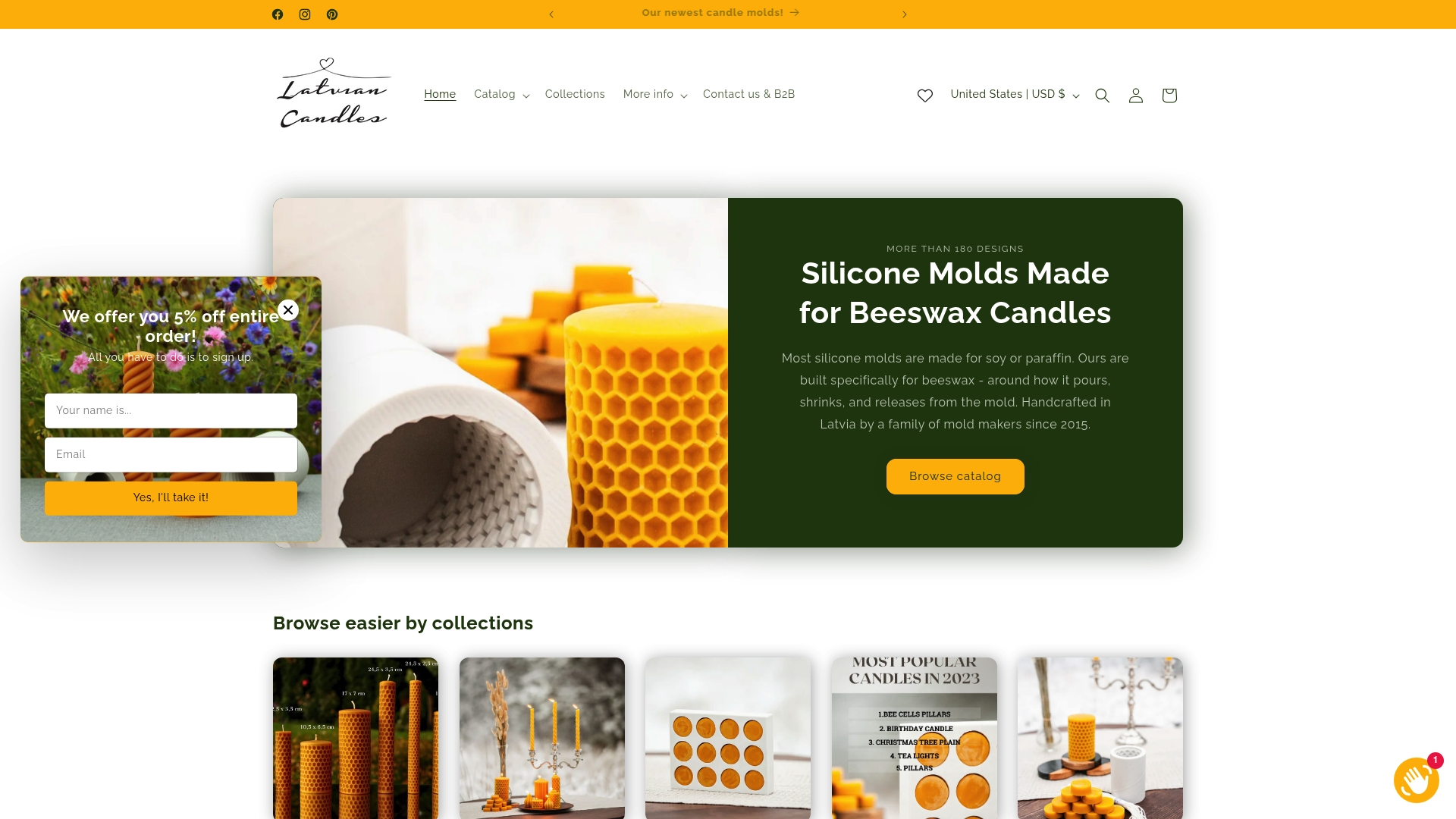
Latviancandles has served hobbyists and small-batch makers since 2015, with a catalog built around beeswax-specific design requirements rather than general-purpose candle molds. Browse the full collection or pick up a DIY starter kit to get started with the right mold and supplies from the first pour.
Sources
- Beekeepingmadeeasy
- Best Bees Wax for Candle Making: A Complete Guide - Rustic Roots Living
- How to Make Beeswax Candles: Rolled, Dipped & Poured
FAQ
What is a curated natural goods store for beeswax candle making?
It is an online shop that handpicks beeswax-specific supplies — silicone molds, pure beeswax, natural wicks, and accessories — against defined material, sourcing, and usability standards rather than stocking general craft products.
What silicone mold features matter most for beeswax?
Look for food-grade or PTFE-free labeling, a listed pour volume, and a wick diameter recommendation. Common beeswax pillar molds use roughly 9.8–11.8 oz of wax and finish around 2¼" x 6".
Are beeswax pellets better than blocks for hobbyists?
Pellets melt faster and are easier to measure accurately than blocks, making them the practical choice for hobbyists using a double boiler and working in small batches.
How do I verify a store’s sourcing claims?
Ask for the wax region of origin, apiary type, and filtration method.
Where can I find handcrafted silicone molds designed for beeswax?
Latviancandles offers 180+ artisan silicone mold designs built specifically for beeswax, with full product specs and step-by-step tutorials to support both hobbyists and small-batch makers.


