
Why Reusable Silicone Molds Appeal to Retailers
Reusable silicone molds appeal to retailers because they lower cost-per-unit, deliver consistent candle dimensions across many pours, and produce damage-free finished products that display and sell cleanly. For small-batch beeswax candle makers, understanding why those features matter to a buyer is the difference between a sample that gets a second meeting and one that doesn’t. Latviancandles, a family-run mold maker operating since 2015 with over 180 silicone designs, builds its catalog around exactly these retailer-facing qualities: durability, repeatable finish, and a shape range that covers tapers, pillars, tea lights, and bee-cell textures.
Key retailer-facing advantages at a glance:
- Durability: Quality silicone molds withstand hundreds of pour cycles without shape or surface degradation.
- Consistent finish: Flexible silicone releases intricate detail cleanly, keeping candle dimensions uniform across batches.
- Easy demolding: No cracking, bending, or surface damage to finished candles, which reduces damaged-goods write-offs.
- Low cleanup: Silicone requires little to no release agent and wipes clean between pours.
- Shape range: Tapers, pillars, tea lights, and decorative bee-cell molds cover most retail SKU needs.
Pro Tip: Bring a 10-pour demo sample set to any buyer meeting. Showing the same mold used ten times with identical output removes the buyer’s biggest objection before they raise it.
Key Takeaways
Reusable silicone molds appeal to retailers because durability, finish consistency, and low return rates translate directly into predictable margin and clean shelf presentation.
| Point | Details |
|---|---|
| Durability lowers cost-per-unit | Quality silicone molds last 100+ pours, spreading tooling cost across a full production run. |
| Consistent dimensions simplify SKUs | Uniform candle height and diameter support single UPC assignment and stable shelf pricing. |
| Documentation closes deals | A 10–20 pour test log with burn photos removes the buyer’s testing burden at the first meeting. |
| Sample kit composition | Bring 1 taper, 1 pillar, and 2 tea-light or bee-cell molds plus a care card to any buyer meeting. |
| Latviancandles catalog | 180+ food-grade silicone designs with starter kits and wholesale spec sheets available on request. |
Table of Contents
- Why do reusable mold features matter to retailers?
- What specs and tests do retailers actually check?
- How do wholesale terms work for small-batch mold sellers?
- How do you pitch molds to a retailer and set up a display?
- What actually moves a retail buyer
- Latviancandles molds for retail-ready beeswax candle production
- Sources
- FAQ
Why do reusable mold features matter to retailers?
Retailers think in margin, return rates, and shelf life. Each silicone mold feature maps directly to one of those three concerns.
Durability reduces cost-per-unit. A mold that runs 100+ pours without measurable shape change means a maker’s tooling cost spreads across a large production run. That lower effective cost-per-unit lets the maker price competitively at wholesale while still protecting margin. Rigid plastic molds that warp or crack after 20–30 pours force frequent retooling, which compresses margin and disrupts restock cadence.
Dimensional consistency simplifies SKU management. When every taper comes out at the same height and diameter, the retailer can assign a single UPC, standardize packaging, and set a fixed shelf price. Variation between batches creates pricing confusion and makes seasonal reorders harder to plan.
| Mold feature | Retail impact |
|---|---|
| 100+ pour durability | Lower cost-per-unit; predictable restock schedule |
| Consistent dimensions | Single UPC per SKU; clean shelf presentation |
| Non-stick surface | Less labor per batch; fewer damaged candles |
| Flexible demolding | Intricate textures intact; gift-quality finish |
| Heat-rated silicone | Safe for beeswax pour temps (175–185°F); fewer defects |
According to a 2025 candle-making guide, nearly 40% of beginner pillar failures trace back to improper mold preparation rather than mold design. Retailers prefer suppliers who provide clear test documentation precisely because that failure rate is preventable. A maker who hands a buyer a one-page test log eliminates that concern immediately.
Silicone also insulates, so wax stays warmer longer than it would in a metal mold. That can increase sinkhole risk if the maker doesn’t adjust pour technique. Documenting a second-pour correction in your sample notes shows buyers you’ve already solved the problem they’d otherwise discover after their first complaint.
Silicone molds require little to no release agent and clean quickly between batches, which cuts labor time in small-batch production. Retailers value that in a supplier because it means faster turnaround on reorders.
What specs and tests do retailers actually check?
Retail buyers ask specific questions. Having answers ready in writing closes deals faster.
Technical specs to document:
- Silicone grade: food-grade or equivalent heat-rated silicone
- Max pour temperature: rated for beeswax at 175–185°F
- Wall thickness: 4mm or greater for structural durability
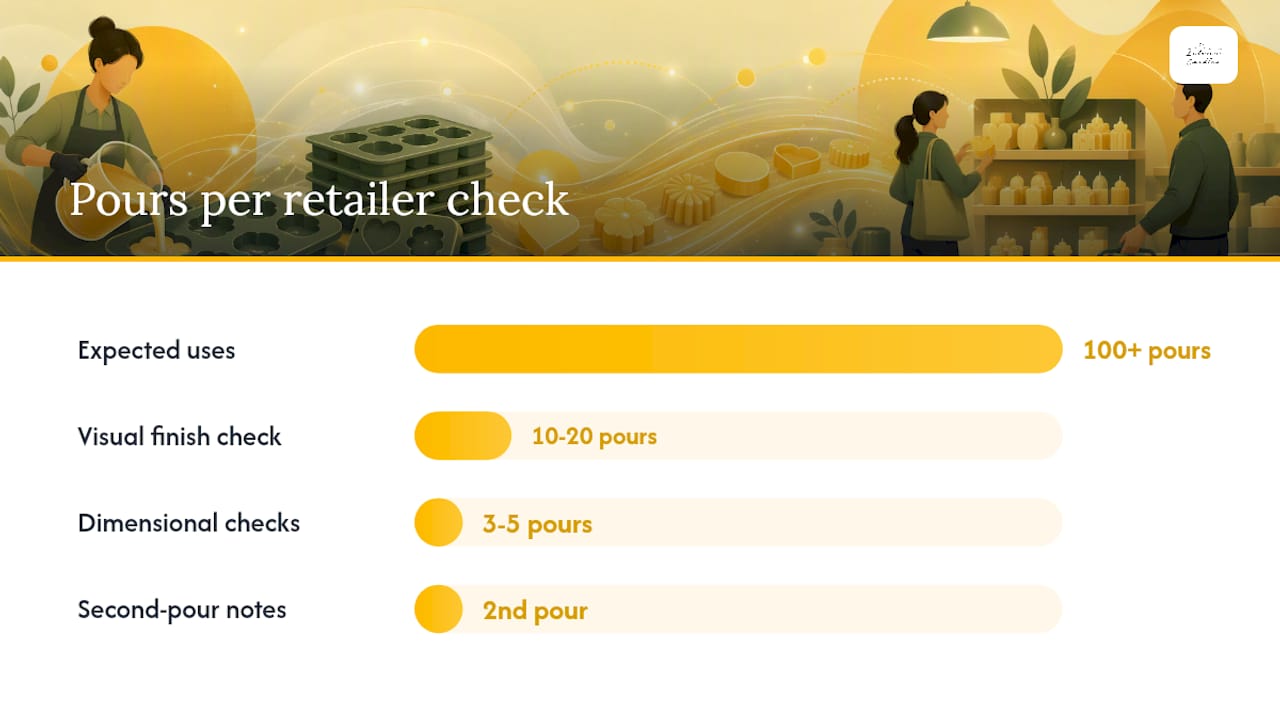
- Expected pour count: 100+ uses for quality molds
- Mold dimensions: height, diameter, and wax weight per cavity
Testing checklist buyers expect:
- Sample burn test photos (wick centered, clean burn pool, no tunneling)
- Visual finish photos after 10–20 pours showing surface consistency
- Dimensional tolerances (height and diameter measurements across 3–5 pours)
- Pour temperature log and second-pour notes for pillar molds
Cylinder and hexagon pillar molds in sizes such as 2¼" × 6" are standard retailer reference points. Wick sizes #3–#7 cover most pillar diameters; having that chart ready on a product card removes a common buyer question.
Packaging requirements:
- Clear label: candle type, wax weight, and finished dimensions
- UPC or barcode readiness
- Shrink wrap or box packaging suitable for shelf display
Pro Tip: Add recommended wick size and best pour temperature directly to each product card. Retailers pass that information to customers, which reduces returns and post-sale questions.
Flexible molds handle beeswax cooling shrinkage better than rigid alternatives, which simplifies release and preserves intricate surface textures. That matters for bee-cell and decorative molds where surface detail is the primary retail selling point.
How do wholesale terms work for small-batch mold sellers?
Wholesale pricing for silicone molds follows standard retail math: a 2.0–2.5× markup on production cost sets the wholesale price, and the retailer typically doubles that for the shelf price (keystone pricing). Mold durability changes the effective cost calculation over time.
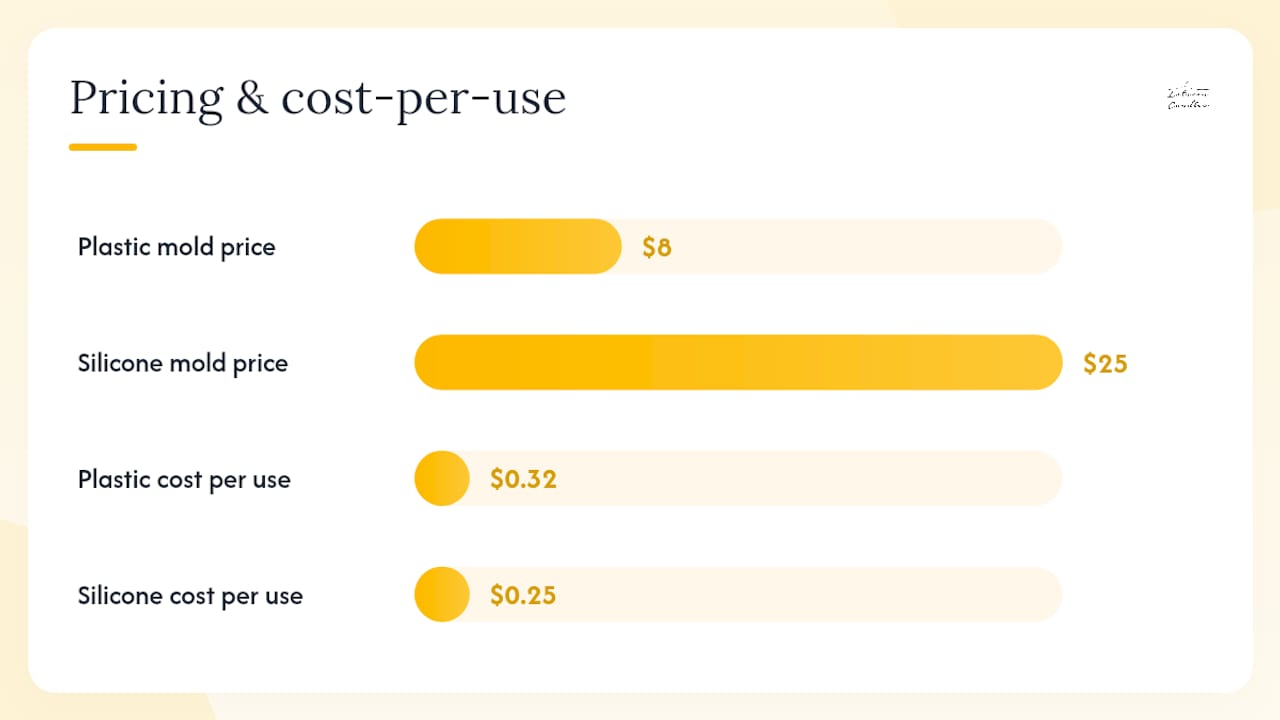
Simple cost-per-use comparison:
A low-cost rigid plastic mold at $8 that lasts 25 pours costs $0.32 per use. A quality silicone mold at $25 that lasts 100+ pours costs $0.25 or less per use. Over a production run, the silicone mold is the cheaper tool, and that math is worth showing a buyer.
MOQ and sample kit guidance:
- Single-SKU sample packs: 1 mold per design, no minimum
- Case quantities: 6–12 units per SKU is a workable starting MOQ for small-batch makers
- Recommended sample kit: 1 taper mold, 1 pillar mold, 2 tea-light or bee-cell variants, plus a printed care card
Lead times and payment terms:
- Small-batch lead window: 2–4 weeks from order to ship is a realistic SLA for handcrafted molds
- Net-30 terms are standard for first retail orders; net-60 for established accounts
- Sample return policy: non-returnable samples are common; offer a credit toward a first order instead
- Manufacturing defect warranty: 90 days covers most buyer concerns
Packaging and cartonization affect freight cost. Flat-pack or nested mold storage reduces box volume and per-unit landed cost, which matters when a retailer calculates total shelf cost.
How do you pitch molds to a retailer and set up a display?
Sample pitch paragraph (adapt for email or in-person):
“These are food-grade silicone beeswax candle molds, handcrafted in Latvia since 2015. Each mold runs 100+ pours without shape change, so your restock cadence is predictable. The finished candles demold cleanly, photograph well, and hold intricate surface detail that justifies a premium shelf price. I can supply a sample kit with a taper, a pillar, and two tea-light molds so your team can test before committing to a case order.”
Three buyer-focused value lines:
- Durability = predictable refill orders with no tooling surprises
- Artisan origin = local/craft story that supports premium pricing and gift positioning
- Consistent finish = clean UPC mapping and uniform shelf presentation
Display and merchandising ideas:
- Sample tray: 3 finished candles (taper, pillar, tea light) with a small card reading “Made with reusable silicone molds — gift-ready, every batch”
- Bundle: starter kit plus wick holders as a single SKU for craft-section endcaps
- Seasonal placement: holiday gift tables (November–December), craft fair endcaps, farmers’ market display stands
Target customer cues for the retailer:
- Eco-conscious gift buyers looking for natural wax candles
- Craft shoppers who value handmade and artisan-origin products
- Farmers’ market regulars who respond to local and small-batch stories
Include a simple care card with each finished candle: cleaning instructions, burn time, and a note that the mold is reusable. That card reduces returns and increases perceived product value at the point of sale.
What actually moves a retail buyer
Most makers walk into a buyer meeting with a finished candle and a price sheet. That combination rarely closes a deal on the first visit. What moves buyers is documentation they don’t have to produce themselves.
The question buyers ask most often isn’t “how does it look?” It’s “what happens after 50 orders?” Durability data, a pour-temperature log, and a sample burn photo answer that question before it’s asked. A maker who presents a 10-pour test set alongside finished candles signals that the production process is repeatable, not lucky.
Bee-cell and decorative textures also command higher retail prices because the surface detail is visibly different from mass-market candles. That price gap is the retailer’s margin. Showing a buyer that intricate textures transfer cleanly from mold to finished candle, without breakage or smearing, makes the premium price defensible on the shelf.
Latviancandles molds for retail-ready beeswax candle production
Latviancandles offers over 180 silicone mold designs built for beeswax candle making, covering the four SKU types retailers stock most: bee-cells pillars, bee-cells tea lights, taper molds, and decorative pillar shapes. Each mold is food-grade silicone, rated for beeswax pour temperatures, and designed for 100+ pours without surface degradation.
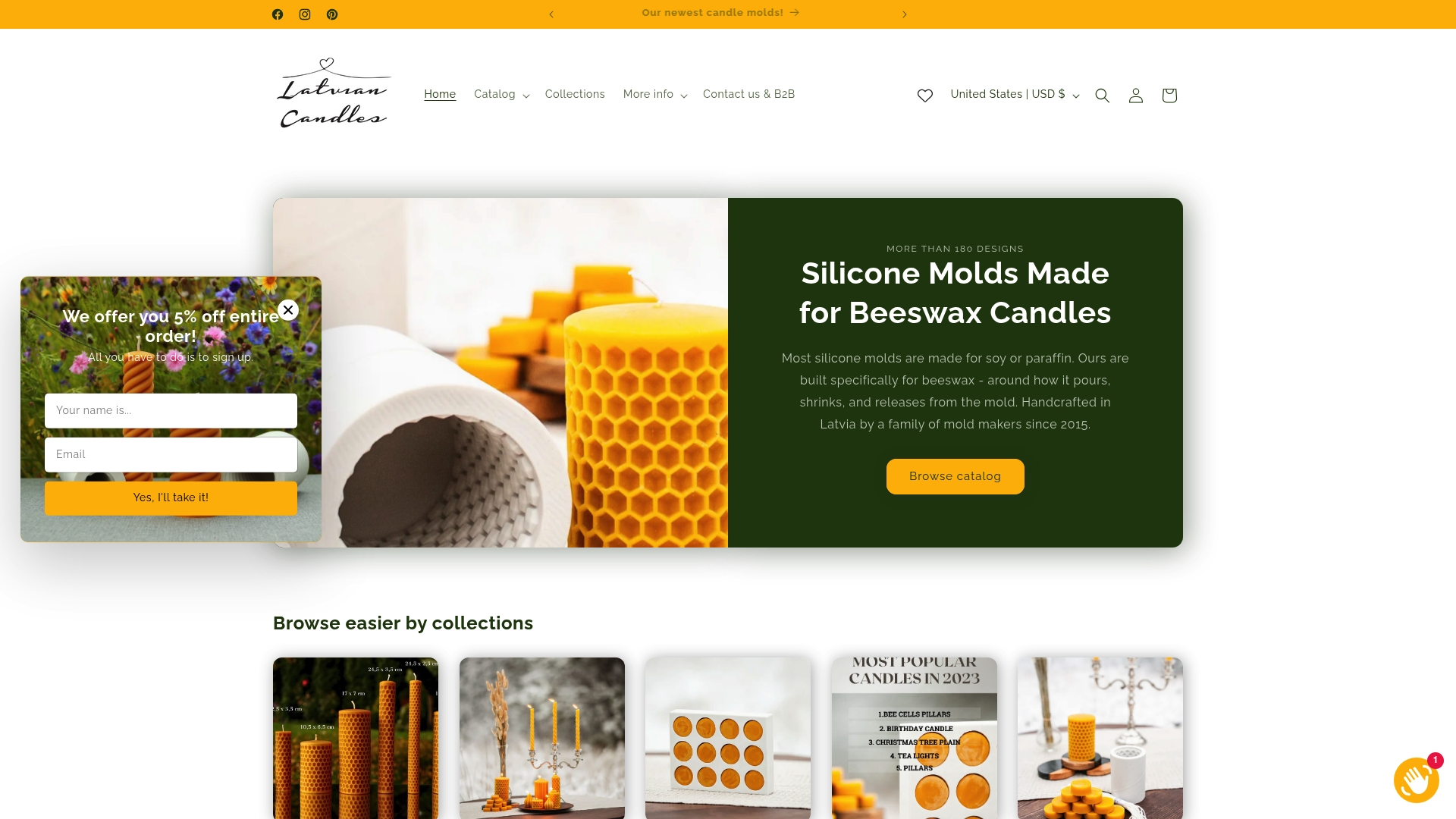
For retailers and makers preparing a sample kit, the DIY Candle Making Starter Kit combines a taper mold, a pillar mold, and tea-light molds with a printed care card and recommended wick sizes. Wholesale pricing, product spec sheets, and pour instructions for beeswax are available on request. Browse the full mold catalog or contact Latviancandles directly to request a sample pack and wholesale terms.
Sources
- Why Are Silicone Molds Preferred Over Tin Or Plastic Molds For Beeswax Candles? Boost Efficiency & Quality - HonestBee
- Ultimate Wax Candle Molds Guide (2025) | Candle Making Craft
- Beekeepingmadeeasy
- Can You Use Silicon Molds When Making Beeswax Candles | My Candle Making
FAQ
Why do reusable silicone molds appeal to retailers over plastic molds?
Silicone molds last 100+ pours without shape change, produce consistent candle dimensions, and require no release agent, which lowers labor cost and return rates. Rigid plastic molds warp or crack far sooner, disrupting restock schedules and compressing margin.
What pour temperature works for beeswax in silicone molds?
Beeswax melts at approximately 144–147°F and pours best at 175–185°F in silicone molds. Documenting that temperature range in your product spec sheet helps retailers answer customer questions and reduces post-sale complaints.
What should a sample kit include for a retail buyer meeting?
A practical sample kit contains one taper mold, one pillar mold, and two tea-light or bee-cell mold variants, plus a care card listing recommended wick sizes and pour temperature. Latviancandles offers a starter kit that covers this configuration.
How do I set wholesale pricing for silicone beeswax candle molds?
A standard 2.0–2.5× markup on production cost sets the wholesale price; the retailer then applies keystone pricing for the shelf. Mold durability over 100+ pours lowers effective cost-per-use, which gives you room to price competitively without cutting margin.
What wick sizes work with pillar and taper beeswax candle molds?
Wick sizes #3–#7 cover most pillar diameters; the correct size depends on the mold’s finished candle diameter. Listing the recommended wick size on each product card reduces buyer questions and lowers return rates.


