
Pillar vs Taper Candles: Differences for Crafters & Decorators
Pillar candles are thick, free-standing cylinders that hold their own shape as they burn. Taper candles are tall, slender, and need a holder to stay upright. That single distinction, shape and stand, decides almost everything else: burn time, where you place them, and how much wax you’ll go through.
- Pick a pillar for a long-burning centerpiece or lantern display that needs no accessories.
- Pick a taper for a formal dinner table, a wedding ceremony, or anywhere height and elegance matter more than runtime.
Key Takeaways
Pillar candles stand alone and burn long; taper candles need a holder and burn faster, and that shape difference drives every other decision a crafter or decorator makes.
| Point | Details |
|---|---|
| Shape decides the holder | Pillars are self-standing; tapers require a fitted holder to stay upright. |
| Wax hardness matters | Pillars need firmer wax like beeswax to hold shape; tapers can use softer blends. |
| Burn time varies by design | Tapers burn roughly 1 to 2 hours per inch; pillars generally last longer overall. |
| Match wick to wax | Test wick gauge on a sample before a full production run to avoid tunneling or soot. |
| Layer for depth | Combine pillar mass with taper height for a styled, professional-looking centerpiece. |
| Latviancandles supports both | Its silicone molds are formulated for beeswax pillars and tapers, giving crafters consistent shapes to build from. |
Where to Read More
- The Difference Between Taper & Pillar Candles
- Pillar Candles vs Taper Candles - Koch & Co
- Tried & tested dripless tapered candles
Table of Contents
- Pillar Candle vs Taper Candle Differences at a Glance
- What Is a Pillar Candle? Shape, Sizes, and Wax
- What Is a Taper Candle? Shape, Sizes, and Burn Rate
- Core Differences Between Pillar and Taper Candles
- Choosing Between Pillar and Taper Candles by Situation
- Safety and Care Tips for Pillar and Taper Candles
- How Pros Layer Pillar and Taper Candles for Depth
- Make Your Own Pillars and Tapers at Home
- Sources
- FAQ
Pillar Candle vs Taper Candle Differences at a Glance
| Pillar Candle | Taper Candle | |
|---|---|---|
| Shape | Wide cylinder, self-standing | Long, slim, tapers toward the tip |
| Holder needed | No, sits on any flat surface | Yes, requires a fitted holder |
| Typical size | 2 to 4 inches wide, 3 to 9 inches tall | 6 to 18 inches tall, under 1 inch wide |
| Burn behavior | Slow, steady, long total burn hours | Faster burn, roughly 1 to 2 hours per inch |
| Common uses | Centerpieces, lanterns, mantels | Dinner tables, ceremonies, formal settings |
Wax choice shifts these numbers. Beeswax and hard soy blends hold a pillar’s shape at room temperature, while softer paraffin blends are common in tapers because they need to burn fast and clean without buckling.
- If you want maximum burn time with minimal fuss, go pillar.
- If you want height and formality on a table, go taper.
What Is a Pillar Candle? Shape, Sizes, and Wax
A pillar candle is a solid, free-standing cylinder that keeps its structure from the first light to the last inch of wax. No holder required, just a heat-safe plate underneath.
Common pillar dimensions run 2 by 3 inches on the small end up to 4 by 9 inches or larger for statement pieces used in long-lasting ambiance displays. A 3 by 6 inch pillar in a hard wax blend can burn for 40 to 60 hours, which is why they show up so often at events that run all evening.
- Small pillar (2"×3"): shorter burn, good for testing new mold designs
- Medium pillar (3"×6"): common centerpiece size
- Large pillar (4"×9"+): extended burn for multi-day use or big installations
Pillars typically use beeswax or hardened soy wax rather than soft paraffin, since the wax needs a higher melt point to stay upright as it liquefies. A bee cells silicone mold built for beeswax gives crafters that structural reliability without guessing at wax hardness.
Pro Tip: Test your wick size on a small pillar sample before committing to a full batch. A wick that’s too thin causes tunneling down the center; too thick and you get excess soot and a melt pool that spills over the edge.
What Is a Taper Candle? Shape, Sizes, and Burn Rate
A taper candle is long, narrow, and tapers from a wider base to a thin tip. It cannot stand on its own. It needs a candlestick or holder sized to its base diameter.
Typical tapers run 6 to 18 inches tall, with the burn rate estimated as roughly 1–2 hours per inch depending on the wax and wick combination. That means a 10 inch taper might give you 10 to 20 hours of light, but the actual number swings a lot based on formulation.
- Standard taper: 10 to 12 inches, fits most classic candlesticks
- Ceremony taper: 15 to 18 inches, used for extended formal events
- Dripless taper: engineered wax blend meant to minimize wax running down the sides
The narrow shape means tapers melt and drip more readily than pillars, especially in a draft. Independent testing on dripless tapers found real-world drip behavior varies significantly by brand, so a label claiming “dripless” isn’t a guarantee. Always check holder fit before an event. A base that’s slightly too wide will wobble; too narrow and it won’t seat properly.
Pro Tip: If you’re making tapers for a wedding or dinner party, burn one test candle for 30 minutes first. It tells you whether the wax pools evenly or starts running down the side before your guests find out the hard way.
Core Differences Between Pillar and Taper Candles
The two shapes solve different problems, and that shows up in every part of production and use.
Structure and wax. Pillars need a firmer wax blend to hold their form as they burn, which is why beeswax and hardened soy dominate that category. Tapers can use somewhat softer wax since gravity and the holder handle the stability.
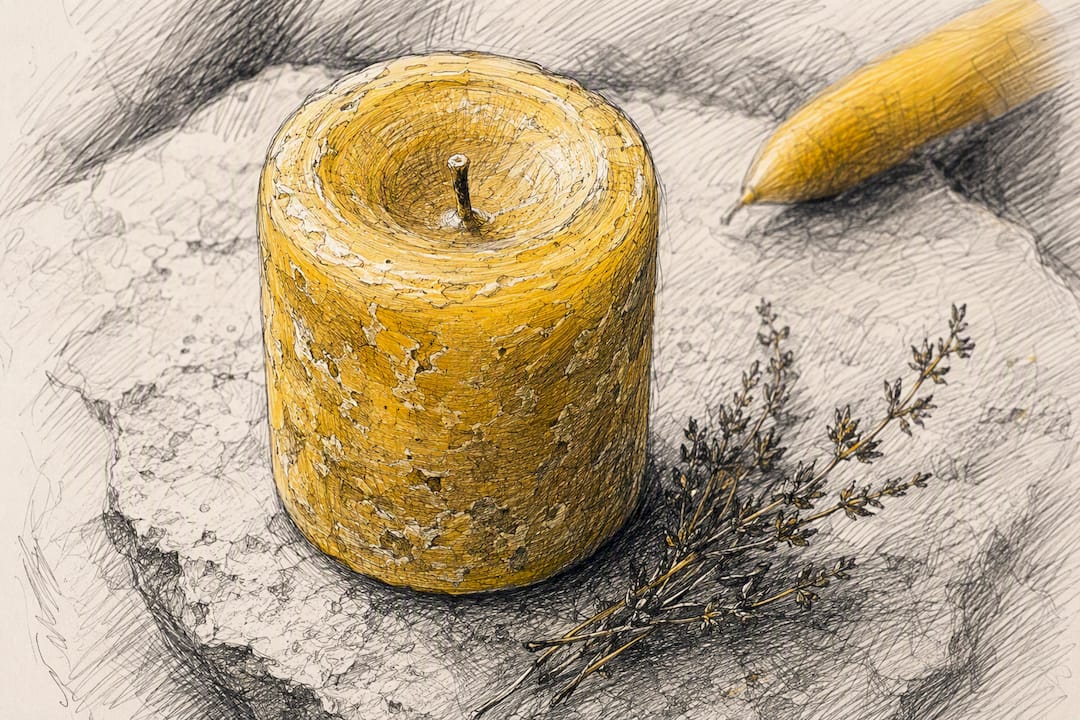
Burn behavior. Pillars burn slower per inch and can last considerably longer in total because of their wax volume. Tapers burn faster and are more prone to tunneling or dripping if the wick isn’t matched correctly to the diameter.
Scent throw. A pillar’s wider surface area and larger wax pool generally releases fragrance more consistently over a long burn. Tapers, with less wax mass, tend to have a lighter, quicker scent release.
Stability and safety. Pillars are lower-risk for tipping since they’re wide and low to the surface. Tapers are taller and top-heavy in their holder, so drafts and uneven surfaces matter more.
Cost and upkeep. Tapers require an ongoing accessory, holders, plus more frequent replacement since they burn through faster. Pillars are a bigger upfront wax investment but need no extra hardware.
- Wider wax pool = better scent throw, more even burn
- Narrower shape = faster burn, more drip risk
Pro Tip: Match wick gauge to wax hardness before scaling up production. A wick sized for soft paraffin will burn too hot in a firm beeswax pillar, so testing your wick and wax combo on a single unit first saves an entire batch.
Choosing Between Pillar and Taper Candles by Situation
Different settings call for different candle types, and the right pick usually comes down to table height, runtime, and formality.
For event decorators, tapers suit a formal seated dinner or ceremony where height and sightlines matter. Pillars work better for a cocktail hour or reception that runs for hours without anyone refreshing the candles.
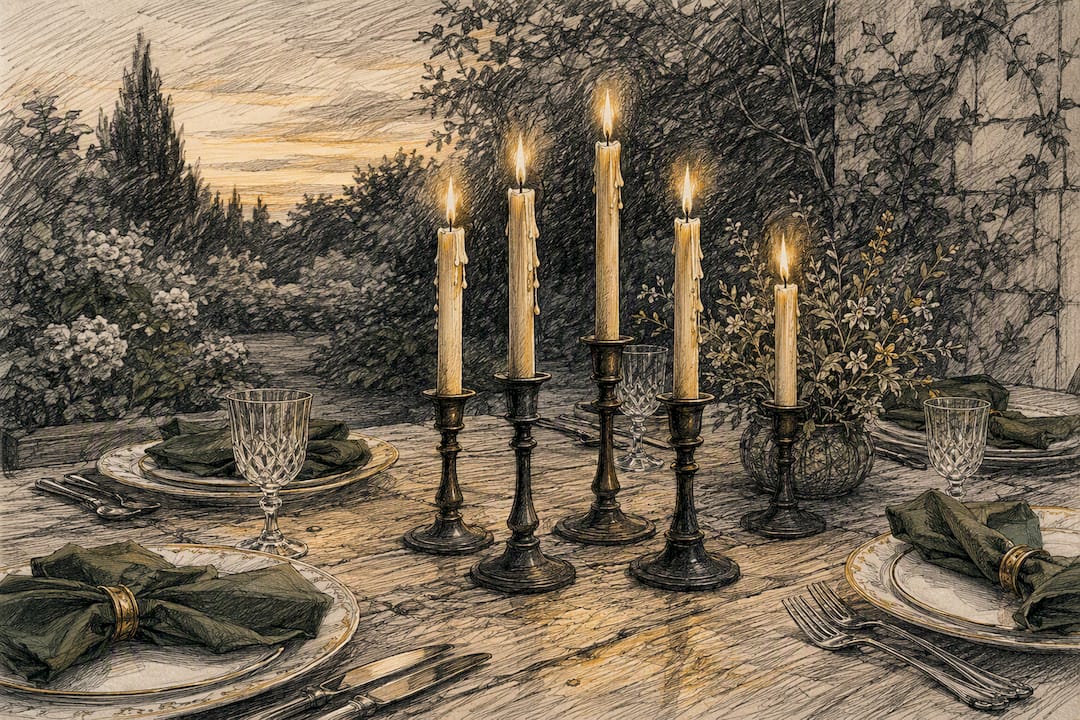
For crafters and small-batch makers, pillars are often the simpler production run since there’s no holder-fit tolerance to hit. Tapers demand more precision in diameter consistency so they seat properly in standard candlesticks.
For home use, pillars suit mantels, lanterns, and bathrooms where you want steady ambient light. Tapers suit a dinner table or a mirror-flanked console where the vertical line matters visually.
- Choose pillars for long-run centerpieces or unattended ambient lighting.
- Choose tapers for height, formality, and shorter, attended events.
- Mix both when you want a layered look with variety in scale.
- Long event, low supervision: pillar
- Formal table, dinner party: taper
- Fire-restricted venue: LED candle alternatives offer hundreds of hours of light without an open flame, though they skip the scent and real wax texture.
Safety and Care Tips for Pillar and Taper Candles
Both candle types need the same baseline precautions: burn on a stable, heat-resistant surface, keep them away from drafts and flammable materials, and never leave a lit candle unattended.
Trim the wick to about a quarter inch before each lighting. A longer wick causes larger flames, more soot, and faster burning than the wax was designed for.
- Use a plate or tray under pillars to catch wax pooling and protect furniture.
- Use holders sized correctly to the taper’s base diameter to prevent tipping.
- Rotate tapers slightly if you notice uneven dripping on one side.
- Store both types flat or upright in a cool space to prevent warping, especially with softer waxes.
The dripless taper testing mentioned earlier found drip behavior differs enough by brand and wax composition that “dripless” labeling shouldn’t replace a physical test burn before an event. A little preparation avoids wax on a tablecloth mid-dinner.
How Pros Layer Pillar and Taper Candles for Depth
Professional decorators combine the two shapes because pillars add visual mass while tapers add vertical lines that draw the eye upward. That contrast between mass and height is what makes a mixed centerpiece look intentional rather than mismatched.
Two layouts work reliably: a trio of low pillars clustered at the center with two flanking tapers on either side, or a staggered row of alternating heights running down a table runner.
- Keep scented pillars for aroma and unscented tapers so the fragrance doesn’t compete or muddy the table.
- Leave negative space between clusters. Crowding every inch of a runner flattens the visual contrast you’re trying to build.
Pro Tip: Vary the scale deliberately. Two pillars of noticeably different diameters read as styled; two pillars of nearly the same size just look like a mistake.
A Note From Marks
Wick testing before a production run isn’t optional if you want consistent results. Latviancandles builds its silicone molds around that same principle, giving crafters a repeatable shape so the wax and wick are the only variables left to solve.
Make Your Own Pillars and Tapers at Home
Once you know the difference between a pillar and a taper, the next step is shaping your own. A silicone mold gives you the same consistent diameter and finish every time, which solves the wick-sizing guesswork that trips up a lot of first attempts.

Latviancandles makes that consistency possible without a factory setup. Its collection of 180-plus silicone mold designs covers pillars, tapers, and decorative shapes built specifically around beeswax’s higher melt point, so your candles hold their form instead of slumping in warm weather. New crafters can start with the DIY Candle Making Starter Kit, which bundles molds and basics into one order. For a decorative pillar with texture that catches candlelight, the Bee Cells Pillars mold is a solid first project. Pair it with the site’s guide to melting beeswax for wax-handling basics, then place your order when you’re ready to pour your first batch.
Sources
- The Difference Between Taper & Pillar Candles
- Pillar Candles vs Taper Candles - Koch & Co
- Tried & tested dripless tapered candles
FAQ
What Is the 3 Candle Rule?
The 3 candle rule is a safety guideline suggesting you keep lit candles at least 3 inches apart to prevent heat buildup, wax pooling issues, and one flame drawing on another’s air supply.
What Is the Purpose of a Pillar Candle?
Pillar candles are built for long, steady, free-standing light, commonly used in centerpieces, lanterns, and mantel displays where no holder is available or wanted.
Are Pillar Candles Worth It?
For long burn time and low accessory cost, pillars are a strong value since they hold their shape and last many hours without needing a holder or replacement mid-event.
What Is the Difference Between a Taper Candle and a Regular Candle?
A taper is a specific style: tall, narrow, and tapered, requiring a holder. “Regular candle” usually refers to container or pillar styles that don’t need a fitted stand and often burn differently as a result.
Can I Use Pillar and Taper Candles Together?
Yes, combining both is a common decorator technique. Pillars provide visual mass at table level while tapers add height, creating a layered look that a single candle type can’t achieve alone.


