
Reusable Molds Cut Candle-Making Waste: Here's How
Reusable molds reduce candle-making waste by spreading material, energy, and manufacturing impacts across dozens or hundreds of pours instead of one. A single silicone mold replaces the stack of one-off forms that would otherwise get discarded after a single beeswax pour, and it changes how you work: design-for-reusability principles push crafters toward accurate measuring, refillable wax dispensing, and repair over replacement. That combination is what actually moves the needle for beeswax candle makers, not the mold material alone.
Three mechanisms do most of the work:
- Fewer discarded molds. One durable silicone mold does the job of many disposable ones.
- Less cured-offcut waste. Weighing wax and using refillable systems means fewer over-poured batches that harden into scrap.
- Better process efficiency. Consistent temperatures and batched pours mean fewer failed casts to remelt or toss.
Lifecycle research on mold materials backs this up: recycled composite molds can retain functionality for hundreds of uses before their per-use environmental cost even approaches that of a single disposable form. Latviancandles has built its entire product catalog around that same logic, sourcing beeswax molds meant to survive years of hobbyist and small-batch production.
Key Takeaways
Reusable silicone molds reduce candle-making waste by amortizing material impact across hundreds of pours and by supporting workflow habits, like weighing wax and refillable dispensing, that cut cured-offcut loss.
| Point | Details |
|---|---|
| Mold reuse beats disposables | One durable silicone mold replaces dozens of single-use forms over its working life. |
| Process habits matter most | Pre-weighing wax and batching pours cuts cured-offcut waste more than mold choice alone. |
| Silicone suits beeswax | Beeswax’s low melting point favors flexible silicone over rigid or high-heat tooling. |
| Repair extends life | Patching small tears and resurfacing can double or triple a mold’s usable lifespan. |
| Latviancandles fits the workflow | Its silicone molds and starter kits are built for the low-waste, repair-first approach this article recommends. |
Table of Contents
- Why Reusable Molds Reduce Waste in Beeswax Candle Making
- Which Mold Materials Work Best for Beeswax
- Building a Low-Waste Casting Workflow
- How Long Do Reusable Molds Last, and What Happens After?
- When Reusable Molds Aren’t the Right Choice
- Why We Build Around Reusable Silicone at Latviancandles
- Shop Reusable Silicone Molds Built for Beeswax
- Sources
- FAQ
Why Reusable Molds Reduce Waste in Beeswax Candle Making
The waste reduction comes from three linked mechanisms: amortized embodied impact, fewer disposable scraps, and lower process waste from better batching habits.
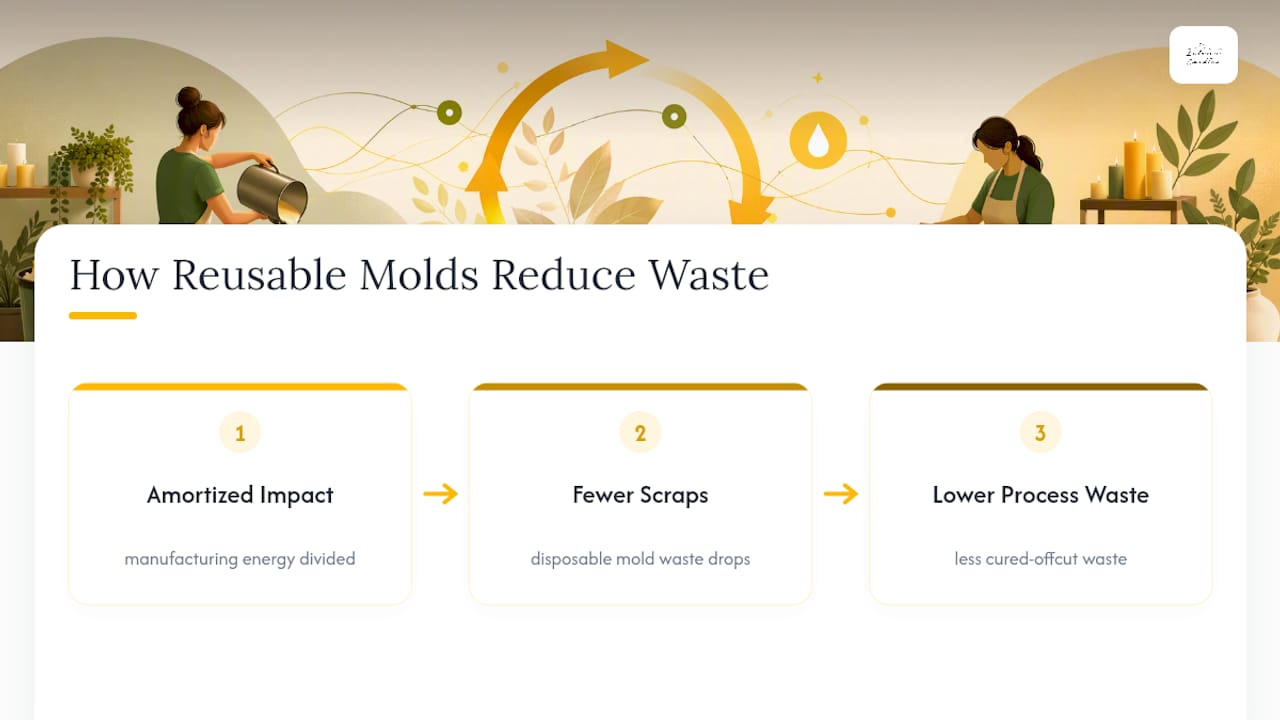
Amortized embodied impact means the energy and material used to manufacture a mold gets divided across every cast it produces. A silicone mold used for 300 pours carries a fraction of the per-candle footprint that a single-use paper or plastic form carries after just one pour. Design-for-reusability research on mold making confirms that durable materials and modular parts extend tooling life and reduce the volume of scrap a shop generates over time.
Fewer disposable mold scraps follow naturally. Disposable forms, whether cardboard tubes or thin plastic shells, get thrown out after one or two uses because they warp, tear, or lose shape. A well-made silicone mold resists that degradation, so rebuild time and disposal costs drop out of your workflow entirely.
Process waste is where most crafters lose material without noticing. Most cured-offcut waste happens during mixing and post-pour cleanup, not in the mold itself. Overestimating how much wax you need for a pour and scraping the excess into the trash after it hardens is a bigger source of loss than mold choice.

Pro Tip: Weigh your wax by the ounce or gram before every pour instead of eyeballing it. Even a rough kitchen scale eliminates most cured leftovers that end up in the trash.
Which Mold Materials Work Best for Beeswax
Food-grade silicone is generally the strongest choice for beeswax candle making. Beeswax melts at a relatively low temperature, typically in the 144 to 147 degree Fahrenheit range, so it never stresses silicone the way high-heat metal casting stresses its tooling. That low-temperature profile is exactly why reusable molds are best suited to lower-melting-point materials and can struggle when pushed into high-heat applications they were never designed for.
Here’s how the common options stack up for candle crafters:
- Flexible silicone: Excellent heat tolerance for beeswax, easy clean release thanks to its flexibility, and long service life when handled with care. Higher upfront cost, but the lowest cost per pour over time.
- Rigid shell or composite molds: Durable for repeated use and good for structured shapes, but less forgiving during demolding and harder to repair when damaged.
- One-off disposable forms: Cheapest per unit, but every pour generates a mold that goes straight to the trash, and shape options are limited.
For hobbyists making a handful of candles a month, a mid-size silicone mold like the Well Mark silicone mold covers most projects. Small-batch sellers producing dozens of units weekly benefit more from molds with wider draft angles and textured internal surfaces, features that speed up clean release and reduce the tearing that shortens a mold’s working life.
Building a Low-Waste Casting Workflow
Process changes matter as much as mold material when it comes to cutting waste. A silicone mold used carelessly still generates plenty of scrap. Here’s a practical sequence that keeps loss to a minimum:
- Pre-weigh your wax for every batch instead of estimating by volume.
- Standardize pour volumes so you’re not constantly adjusting recipes mid-session.
- Switch to refillable containers for bulk wax storage rather than buying single-use packaging repeatedly.
- Hold a consistent melt temperature with a thermometer, since overheated wax degrades faster and produces more failed pours.
- Group similar pours together in one session to avoid reheating wax multiple times, which wastes both energy and material.
Cleaning and storage routines protect the mold itself. Wash silicone molds with mild soap and lukewarm water, dry them fully before storage, and keep them away from direct sunlight and heat sources that cause premature stiffening or cracking. The how-to guide on using our molds covers release techniques that reduce tearing during demolding, which is one of the most common ways a reusable mold gets retired early.
Pro Tip: Batch similar shapes and sizes in the same session. Switching between wildly different pour volumes wastes reheating cycles and increases the odds of a rushed, overfilled pour.
Keep a simple log of how many times you’ve used each mold and note any small tears or wear. That record tells you when a mold needs a repair versus when it’s genuinely done.
How Long Do Reusable Molds Last, and What Happens After?
Regular maintenance and small repairs can double or triple a mold’s usable life, which lowers the environmental cost of every candle it produces. A silicone mold that lasts 400 pours instead of 150 cuts its per-candle impact by more than half.
Routine care includes:
- Gentle hand washing after each use, never harsh solvents.
- Patching small tears with silicone adhesive before they spread.
- Applying mold release consistently to prevent unnecessary stretching during demolding.
- Noting wear patterns so you catch problems early.
Silicone molds with minor tears are often repairable with a food-safe silicone patch kit. Rigid composite molds sometimes need resurfacing rather than patching. Recycled additive-manufactured composite molds have shown they can retain usable function even after mechanical recycling, which points to a real end-of-life pathway beyond the landfill for molds that have reached the end of their working life. When a silicone mold truly can’t be repaired, some recycling programs accept silicone separately from general plastic waste; check local options before tossing it.
Pro Tip: Keep a small repair kit on hand, food-safe silicone adhesive and a release agent, so a minor tear doesn’t force an early retirement.
When Reusable Molds Aren’t the Right Choice
Reusable molds aren’t universally the best option. For a one-off prototype, a highly complex shape that requires destructive demolding, or any process running at extreme temperatures, an expendable method often makes more sense. Reusable molds work well for many lower-temperature materials, but they lose their advantage fast outside that range.
Signals that point toward a disposable or one-off approach:
- You’re testing a single design and don’t plan to repeat it.
- The casting process runs far hotter than beeswax ever will.
- The shape requires breaking the mold to release the piece.
Warning: The upfront cost of a quality silicone mold only pays off once you’ve amortized it across enough pours. If you’re making one candle as a gift, a disposable form may cost less overall.
For trial runs, disposable forms or foam-core shapes still make sense, and a 3D-printed master can help you design a custom shape before committing to a reusable silicone mold.
Why We Build Around Reusable Silicone at Latviancandles
We choose reusable silicone as our foundation for beeswax molds because it matches the wax’s low melting point, tolerates repeated demolding without tearing, and holds up to the kind of small repairs that keep a mold in service for years rather than months. That’s not a marketing position. It’s the same logic behind every one of the 180-plus designs we’ve made since 2015.
Our crafting guides walk through grouped pours, batch sizing, and mold care because those habits matter as much as the silicone itself. If you’re just getting into candle making, starting with one of our starter kits and a couple of versatile shapes will teach you the workflow faster than buying ten different molds at once.
Shop Reusable Silicone Molds Built for Beeswax
Every design in our catalog is made to survive hundreds of pours, not a handful, which is the entire point of choosing reusable silicone over disposable forms in the first place.
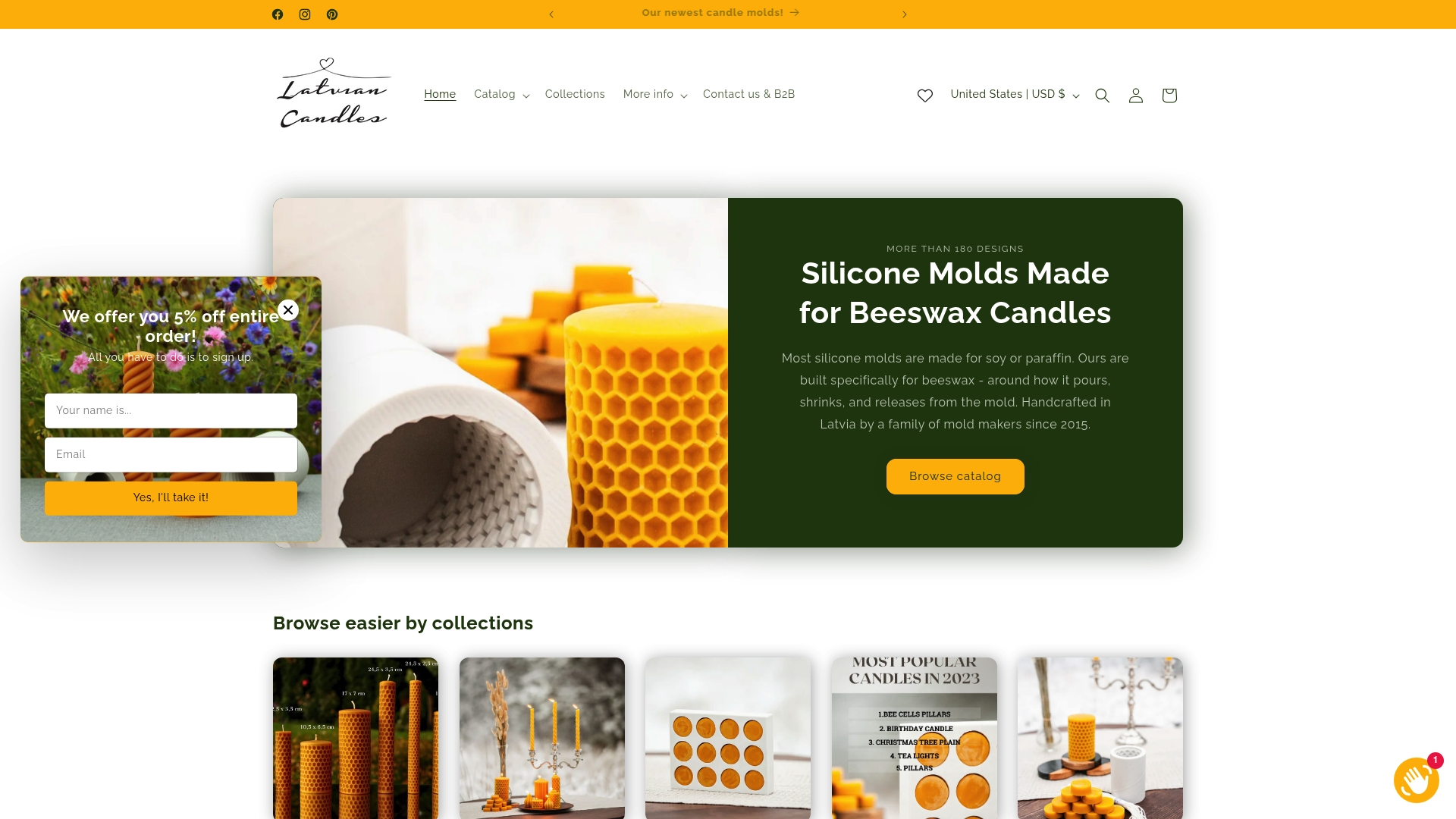
Three things matter most if you’re shopping with waste reduction in mind. First, long service life: our molds are built from food-grade silicone that resists tearing across repeated beeswax pours. Second, easy cleaning and repair: smooth internal surfaces release wax cleanly and patch easily if a small tear develops. Third, beeswax-specific design: draft angles and textured details are built for clean demolding at beeswax’s low melting point, not adapted from resin or soap molds.
Browse the full range of beeswax candle molds to find a shape that fits your project, or start with our DIY candle making starter kit if you’re setting up a low-waste workflow for the first time. Pick a mold, check the size against your usual batch volume, and place your order when you’re ready to start casting.
Sources
- Circular Economy in Mold Making: Designing for Reusability and Reduced Waste
- The difference between expendable & reusable molds in the casting process
- OSTI report on mold materials, lifecycle impacts, and recycling (extracts)
- Eco-Friendly Mold Making & Casting Over Foam: Reusable, Recyclable, and Refillable Options
FAQ
Why do reusable molds reduce waste in candle making?
They spread a mold’s manufacturing impact across hundreds of pours instead of one, and they support habits like weighing wax and refillable dispensing that cut cured-offcut waste.
What’s the best mold material for beeswax candles?
Food-grade silicone works best because it tolerates beeswax’s low melting point, releases cleanly, and can be patched instead of thrown away when it develops small tears.
How long does a reusable silicone mold last?
With gentle cleaning and small repairs, a well-maintained silicone mold can last for hundreds of pours, and regular maintenance can double or triple its usable life.
When should I use a disposable mold instead?
Choose disposable or one-off forms for single prototypes, extremely high-temperature casting, or shapes that require breaking the mold to release the piece.
Does Latviancandles make molds designed to reduce waste?
Yes. Latviancandles builds its silicone molds for beeswax specifically, with draft angles and surface textures designed for clean release and long-term reuse rather than single-use casting.


